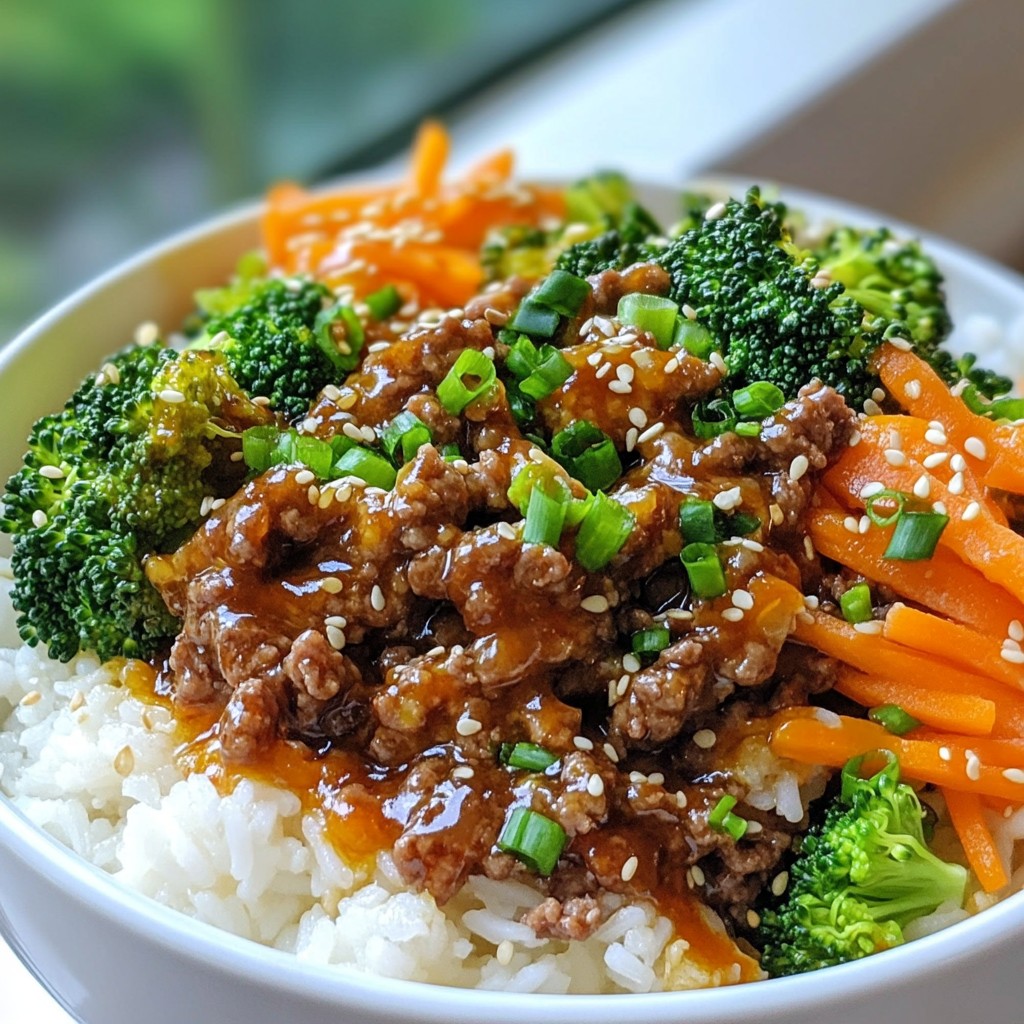
Craving a meal that's quick, tasty, and full of flavor? Spicy Korean Beef Bowls are your answer! With just a few key ingredients like ground beef, gochujang, and fresh veggies, you can whip up a delightfully spicy dish in no time. Whether it's for a busy weeknight or a casual weekend dinner, this recipe packs a punch. Let me walk you through the simple steps to create an unforgettable meal!
Why I Love This Recipe
- Bold Flavor Profile: The combination of gochujang and sesame oil adds a rich depth of flavor that makes every bite exciting.
- Quick and Easy: This recipe can be prepared in just 25 minutes, making it perfect for busy weeknights.
- Customizable Ingredients: Feel free to swap in different vegetables or proteins to suit your taste or what you have on hand.
- Healthy and Balanced: With lean beef and plenty of vegetables, this dish offers a nutritious meal that’s satisfying.
Ingredients
Main Ingredients
- 1 lb ground beef (preferably 80/20 for better flavor)
- 2 tablespoons gochujang (Korean chili paste)
- 3 tablespoons soy sauce
Vegetables
- 1 cup broccoli florets
- 1 carrot, julienned
- 2 green onions, chopped
Cooking Essentials
- 4 cloves garlic, minced
- 1-inch piece ginger, grated
- 1 tablespoon sesame oil
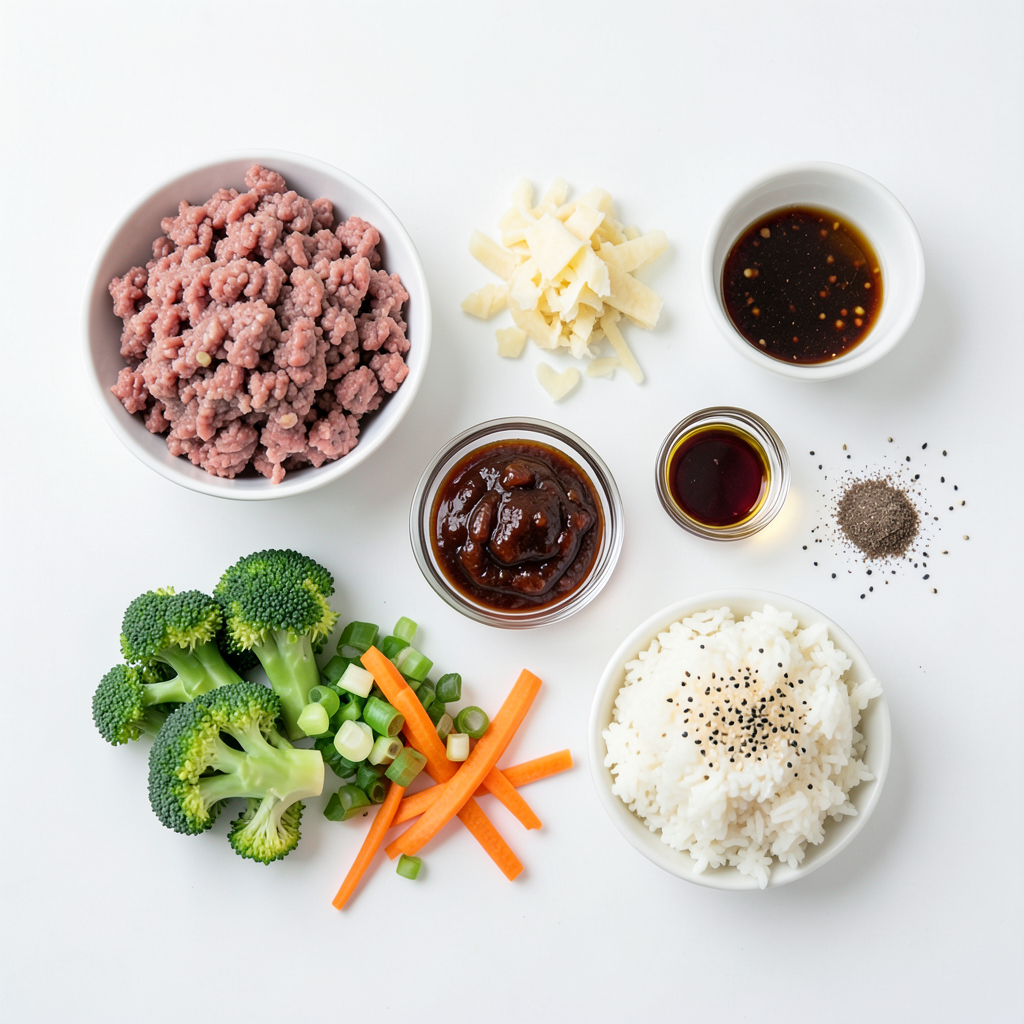
To make Spicy Korean Beef Bowls, start with quality ground beef. Choose 80/20 to get the best flavor. Gochujang brings heat and a deep taste. Soy sauce adds a salty note that balances the dish.
Next, add some vibrant vegetables. Broccoli florets offer crunch and nutrients. Carrots add sweetness and color. Don't forget the green onions for a fresh bite.
Now, for cooking essentials. Minced garlic and grated ginger give a fragrant kick. Lastly, sesame oil enhances the rich flavors and adds a nutty finish.
This mix of ingredients makes your meal tasty and fun. Each bite brings spicy, sweet, and savory together.
Step-by-Step Instructions
Cooking the Beef
1. Start by heating a large skillet over medium-high heat.
2. Add 1 pound of ground beef to the skillet.
3. Cook the beef until it turns brown, about 5-7 minutes.
4. Use a spatula to break apart the beef as it cooks.
5. Drain any excess fat if needed.
6. Add 4 cloves of minced garlic and 1-inch grated ginger.
7. Sauté for 2-3 minutes until you smell the strong aroma.
Making the Sauce
1. In a small bowl, mix together the sauce ingredients.
2. Combine 3 tablespoons soy sauce, 2 tablespoons gochujang, and 1 tablespoon sesame oil.
3. Add 1 tablespoon brown sugar and 1 teaspoon black pepper to the bowl.
4. Pour this sauce over the cooked beef in the skillet.
5. Stir well to coat the beef and cook for an additional 2-3 minutes.
6. Allow the sauce to thicken slightly before removing from heat.
Preparing the Vegetables
1. Fill a separate pot with water and bring it to a boil.
2. Add 1 cup of broccoli florets and 1 julienned carrot to the pot.
3. Steam the vegetables until they are just tender, about 3-4 minutes.
4. Once cooked, remove the broccoli and carrots from the pot.
5. To serve, scoop 2 cups of cooked rice into each bowl.
6. Top the rice with the spicy beef mixture and a generous portion of steamed veggies.
7. Garnish with chopped green onions and a sprinkle of sesame seeds.
Tips & Tricks
Perfecting the Flavor
- Adjusting spice levels: You can change the heat by adding more or less gochujang. Start with one tablespoon, then taste. If you want it spicier, add more. If it’s too hot, add a bit more sugar to balance the heat.
- Enhancing umami with ingredients: To boost the savory flavor, try adding a bit of oyster sauce or mushrooms. These ingredients add depth and richness to the dish.
Cooking Techniques
- Best practices for browning beef: Use a wide skillet and keep the heat high. This helps brown the beef well. Avoid crowding the pan; cook in batches if needed. Browned bits add flavor to the sauce.
- Tips for steaming vegetables: Steam broccoli and carrots until they are bright in color and tender. Avoid overcooking them. This keeps their crunch and bright flavor. A quick steam of 3-4 minutes works well.
Serving Suggestions
- Ideal rice options: White rice pairs well with this dish. Brown rice adds a nutty flavor and more fiber. Choose what you like best!
- Complementary sides: Serve with pickled vegetables or a simple salad. Kimchi also adds a nice kick and complements the meal well.
Pro Tips
- Choose the Right Beef: Using 80/20 ground beef will give your dish more flavor and richness compared to leaner options.
- Adjust Spice Level: If you prefer a milder flavor, reduce the amount of gochujang or add more sugar to balance the heat.
- Vegetable Variations: Feel free to swap in your favorite vegetables like bell peppers or snap peas for added color and crunch.
- Make It Ahead: This dish can be made ahead of time and stored in the fridge for a quick meal; simply reheat before serving.
Variations
Protein Alternatives
You can easily change the protein in Spicy Korean Beef Bowls. Ground chicken or turkey works well. Both options have a lighter taste. They absorb flavors nicely, just like beef. For a vegetarian or vegan twist, use crumbled tofu or tempeh. These options soak up the spicy sauce just like meat does. You can still enjoy all the great flavors while keeping it plant-based.
Flavor Boosts
To make your bowls even tastier, think about adding extra spices. Try a pinch of cayenne for more heat or a dash of smoked paprika for depth. You can also mix in chopped kimchi for a tangy kick. Don't forget about toppings! Sliced radishes, pickled vegetables, or crispy seaweed can add fun textures. Each topping brings something special to your meal.
Dietary Adjustments
If you need gluten-free options, choose tamari instead of soy sauce. It has a similar taste and works great in this dish. For a low-carb version, skip the rice and use cauliflower rice. It gives you the same feel with fewer carbs. You can enjoy a delicious meal that fits your diet without losing flavor.
Storage Info
Refrigeration Guidelines
Store leftovers in an airtight container. Let the beef cool before sealing. Keep it in the fridge for up to three days. When you want to eat it, make sure to reheat it properly. Heat the beef in a skillet over medium heat until hot. Stir it often to warm evenly. You can also microwave it, but stir halfway through for even heat.
Freezing Tips
You can freeze the beef mixture for later. Let it cool first, then place it in a freezer-safe container. It will last about three months in the freezer. To thaw, move it to the fridge overnight. When ready to eat, reheat it in a skillet until hot. You can also use the microwave. Just keep stirring to avoid cold spots.
Shelf Life
In the fridge, your Spicy Korean Beef Bowls will stay fresh for three days. Look for any signs of spoilage, like a sour smell or odd color. If you see any mold, throw it away. Always trust your senses!
FAQs
How to make Spicy Korean Beef Bowls from scratch?
To make Spicy Korean Beef Bowls, follow these steps:
1. Heat a large skillet over medium-high heat.
2. Add 1 lb of ground beef, cooking it until browned, about 5-7 minutes.
3. If needed, drain any excess fat.
4. Add 4 cloves of minced garlic and 1 inch of grated ginger.
5. Sauté for 2-3 minutes until fragrant.
6. In a small bowl, mix 3 tablespoons of soy sauce, 2 tablespoons of gochujang, 1 tablespoon of sesame oil, 1 tablespoon of brown sugar, and 1 teaspoon of black pepper.
7. Pour this sauce over the beef. Stir well and cook for 2-3 minutes.
8. Meanwhile, steam 1 cup of broccoli florets and 1 julienned carrot for 3-4 minutes.
9. To serve, place cooked rice in bowls, top with beef, and add the vegetables.
10. Garnish with chopped green onions and sesame seeds.
What can I use instead of gochujang?
If you don’t have gochujang, you can use sriracha or chili paste. These substitutes still add heat but will be less sweet and deep in flavor. You can mix in a bit of sugar to mimic gochujang's sweetness. Hot sauce can work in a pinch too, but it may change the taste.
Can I prepare this recipe in advance?
Yes, you can prepare Spicy Korean Beef Bowls in advance. Cook the beef and sauce ahead of time and store them in the fridge. You can also cut the vegetables beforehand. When ready to serve, just heat the beef and steam the veggies. This method saves time and keeps your weeknight meals easy and tasty.
This blog post covered how to make Spicy Korean Beef Bowls. We discussed key ingredients, including ground beef, gochujang, and fresh veggies like broccoli and carrots. I shared step-by-step cooking instructions to ensure success. For flavor, we explored tips on adjusting spice levels and various protein options. Finally, we included storage guidelines to help you keep leftovers fresh.
Get ready to enjoy a delicious meal. You now have all the tools to create this dish!