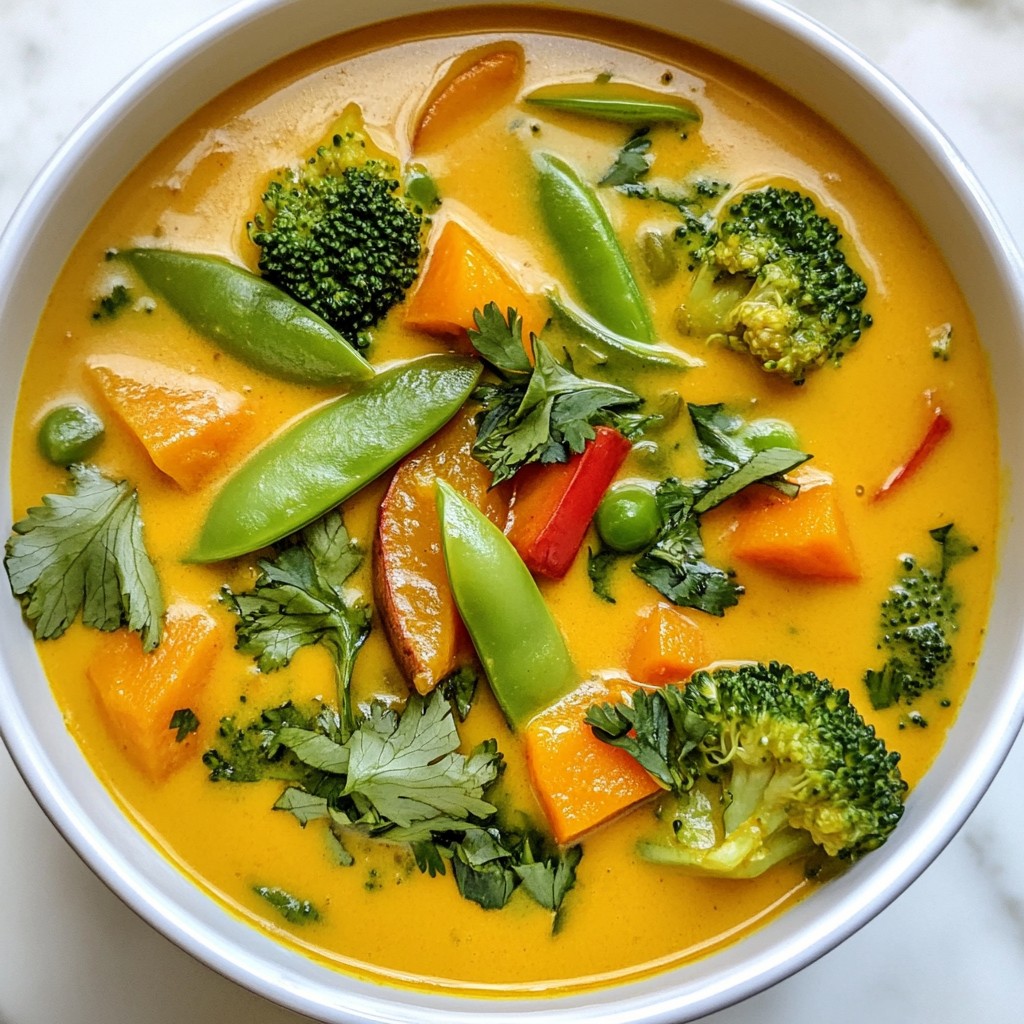
Looking for a warm, flavorful dish that comforts your soul? Thai Coconut Curry Soup fits the bill perfectly. With rich coconut milk and bold spices, it's a taste adventure in every bite. Whether you want a quick weeknight meal or something special for friends, this soup delivers. Join me as I walk you through easy steps, helpful tips, and variations to make this comforting bowl your own!
Why I Love This Recipe
- Aromatic Flavors: This soup combines the warm and inviting scents of coconut, ginger, and garlic, creating an irresistible aroma that fills your kitchen.
- Nutritious Ingredients: Packed with vegetables like sweet potatoes, bell peppers, and broccoli, this curry soup is not only delicious but also healthy.
- Quick and Easy: With a prep time of just 15 minutes, you can have a comforting bowl of soup ready in no time, making it perfect for busy weeknights.
- Customizable: The recipe is versatile, allowing you to add your favorite vegetables or proteins, making it a go-to meal for everyone.
Ingredients
Full List of Ingredients
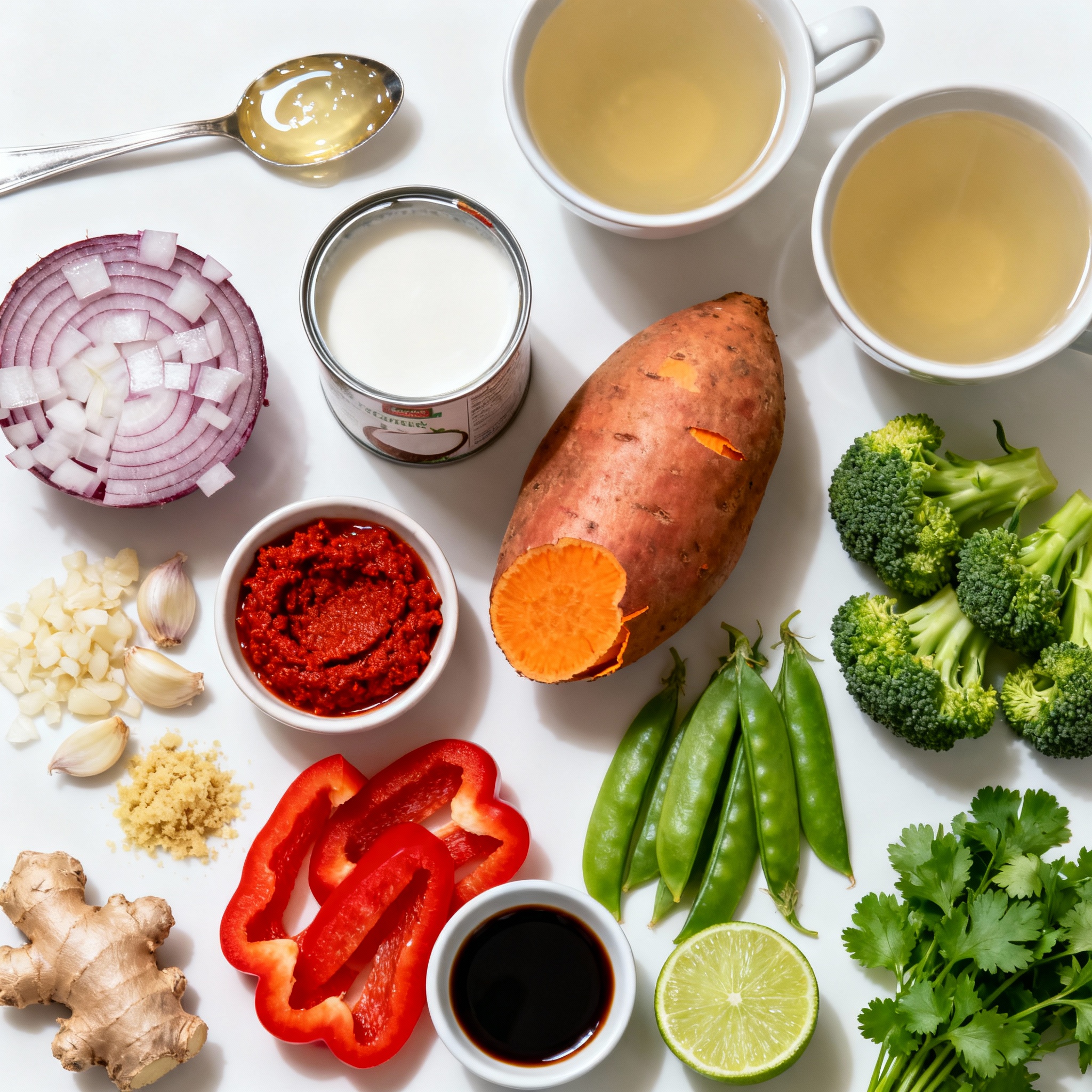
To make this Thai Coconut Curry Soup, gather these items:
- 1 tablespoon coconut oil
- 1 onion, diced
- 3 cloves garlic, minced
- 1 tablespoon fresh ginger, grated
- 1 tablespoon red curry paste
- 1 can (14 oz) coconut milk
- 3 cups vegetable broth
- 1 medium sweet potato, peeled and cubed
- 1 red bell pepper, sliced
- 1 cup snap peas
- 1 cup broccoli florets
- 2 tablespoons soy sauce or tamari
- 1 tablespoon lime juice
- Fresh cilantro, for garnish
- Salt and pepper to taste
Fresh vs. Frozen Ingredients
I recommend using fresh ingredients when you can. Fresh food often brings better taste and texture. For example, fresh ginger and garlic add a bright flavor to the soup. However, frozen vegetables are great as well. They can save you time and work well in this recipe. If you use frozen, just make sure they are thawed before cooking.
Dietary Considerations (Vegan, Gluten-Free)
This recipe is perfect for many diets! It's vegan because it uses coconut milk and vegetable broth. For those who need gluten-free options, use tamari instead of soy sauce. Always check labels to be sure your ingredients are gluten-free. This soup is a warm, inviting dish for everyone at your table!
Step-by-Step Instructions
Detailed Cooking Process
To start, grab a large pot and heat 1 tablespoon of coconut oil over medium heat. Once hot, add 1 diced onion. Sauté for about 3-4 minutes until the onion turns soft and clear. Next, stir in 3 minced garlic cloves and 1 tablespoon of grated ginger. Cook them for another 1-2 minutes. You want to smell that lovely aroma!
Now, it's time to add in 1 tablespoon of red curry paste. Stir well to mix it with the onions, garlic, and ginger. Let it cook for one more minute. This step builds great flavor.
Pour in 1 can (14 oz) of coconut milk and 3 cups of vegetable broth. Stir until the curry paste mixes in fully. Add 1 cubed sweet potato and bring the soup to a gentle simmer. Let it cook for about 10 minutes, until the sweet potato is soft.
After that, add 1 sliced red bell pepper, 1 cup of snap peas, and 1 cup of broccoli florets. Simmer for another 5-7 minutes. You want the veggies to stay bright and a bit crunchy.
Finally, stir in 2 tablespoons of soy sauce or tamari and 1 tablespoon of lime juice. Taste the soup and add salt and pepper as needed. Remove it from the heat. Ladle the soup into bowls and finish with fresh cilantro on top. Enjoy your warm, comforting bowl of Thai Coconut Curry Soup!
Cooking Tips for Beginners
- Always prep your ingredients first. This makes cooking easier and more fun.
- Use a timer to avoid overcooking your veggies. They should be tender but still bright.
- Taste your soup as you go. Adjust flavors to suit your taste.
- If you find the soup too thick, add more vegetable broth gradually.
How to Achieve Authentic Thai Flavors
To get those real Thai flavors, focus on fresh ingredients. Use fresh ginger and garlic instead of powdered forms. Choose high-quality red curry paste for depth.
Lime juice adds brightness. Always squeeze it in at the end for the best flavor. Adding fresh cilantro as a garnish also ties everything together. For a bit of heat, you can add some sliced fresh chili peppers.
Tips & Tricks
Adjusting Spice Levels
If you want to change the spice, start with less curry paste. You can add more later. Taste the soup as it cooks. This way, you will find the right heat for your taste buds. If it gets too spicy, add more coconut milk to cool it down.
Using Leftover Ingredients
This soup is great for using leftovers. If you have extra veggies, toss them in! Spinach, carrots, or even cooked chicken can fit well. Just remember to adjust cooking time. Add quick-cooking items last, like snap peas. This keeps your soup fresh and bright.
Best Practices for Timing and Texture
Timing is key for the best texture. Cook the sweet potato first, as it takes longer to soften. When you add other veggies, keep them vibrant. Simmer them just until they’re tender-crisp. This adds a nice crunch to your soup. Lastly, don’t forget to garnish with fresh cilantro. It adds flavor and color to your dish!
Pro Tips
- Use Fresh Ingredients: Fresh vegetables and herbs will enhance the flavors of your soup significantly, so try to use them when possible.
- Adjust Spice Level: If you prefer a milder soup, start with less red curry paste and add more gradually to suit your taste.
- Make It a Meal: Add cooked protein such as chicken, shrimp, or tofu for a heartier version of this soup.
- Storage Tips: This soup keeps well in the fridge for up to 3 days. Reheat gently on the stove and add a splash of coconut milk to revive its creaminess.
Variations
Protein Add-Ins (Chicken, Tofu)
You can add protein to your soup for extra flavor and nutrition. Chicken works great. Just cook diced chicken in the pot before adding other ingredients. This gives your soup a nice depth. If you prefer a plant-based option, use tofu. Firm tofu is best. Cut it into cubes and add it when you put in the sweet potato. This way, it absorbs all the tasty broth.
Vegetable Substitutions
Feel free to mix and match your vegetables. Carrots or zucchini can replace sweet potatoes. Both add color and crunch. You could also use baby corn or bell peppers for a fresh twist. Just keep in mind the cooking time. Harder veggies may need extra simmering to soften.
Flavor Enhancements (Herbs, Spices)
To make your soup even tastier, add fresh herbs like basil or mint. These herbs brighten the dish and add layers of flavor. You can also sprinkle in some chili flakes for heat. If you like it spicy, add more red curry paste. Just taste as you go to find your favorite balance.
Storage Info
How to Store Leftovers
To keep your Thai Coconut Curry Soup fresh, let it cool first. Transfer it to an airtight container. Store in the fridge for up to three days. Make sure to label the container with the date. This helps you keep track of how long it’s been stored.
Reheating Instructions
When you're ready to enjoy your soup again, pour it into a pot. Heat it on medium heat. Stir often to prevent sticking. You can add a splash of water or broth if it seems thick. Warm it until it’s hot, but don’t boil it. You can also use the microwave. Place the soup in a bowl, cover it, and heat for about 2-3 minutes. Stir halfway through for even heating.
Freezing Guidelines
To freeze the soup, let it cool completely. Pour it into freezer-safe bags or containers. Leave some space at the top for expansion. Seal tightly and label with the date. It can last up to three months in the freezer. When ready to eat, thaw it overnight in the fridge. Reheat it on the stove or microwave as described above.
FAQs
What can I substitute for coconut milk?
You can use almond milk or soy milk as a substitute for coconut milk. Both add creaminess, but they change the flavor. Some also use cashew cream for a richer taste. If you want a thicker soup, blend soaked cashews with water. This gives a nice texture.
How long does Thai Coconut Curry Soup last in the fridge?
This soup lasts about three to four days in the fridge. Make sure to store it in an airtight container. When you heat it up, the flavors will blend together even more. Just be careful not to overheat, as the veggies may get mushy.
Can I use a different type of curry paste?
Yes, you can use green or yellow curry paste instead of red curry paste. Each type has its own taste. Green curry paste is spicier and more aromatic. Yellow curry paste is milder and has a sweet flavor. Adjust the amount based on your spice level.
In this blog post, we explored the key ingredients for Thai Coconut Curry Soup, including fresh and frozen options and dietary needs. I shared step-by-step instructions, cooking tips, and ways to enhance authentic flavors. We discussed adjusting spice levels and using leftovers creatively. Finally, I covered storage info and answered common questions.
Thai Coconut Curry Soup is tasty and easy to make. With these tips, you can enjoy a delicious meal anytime. Now, it’s your turn to make this soup your own!