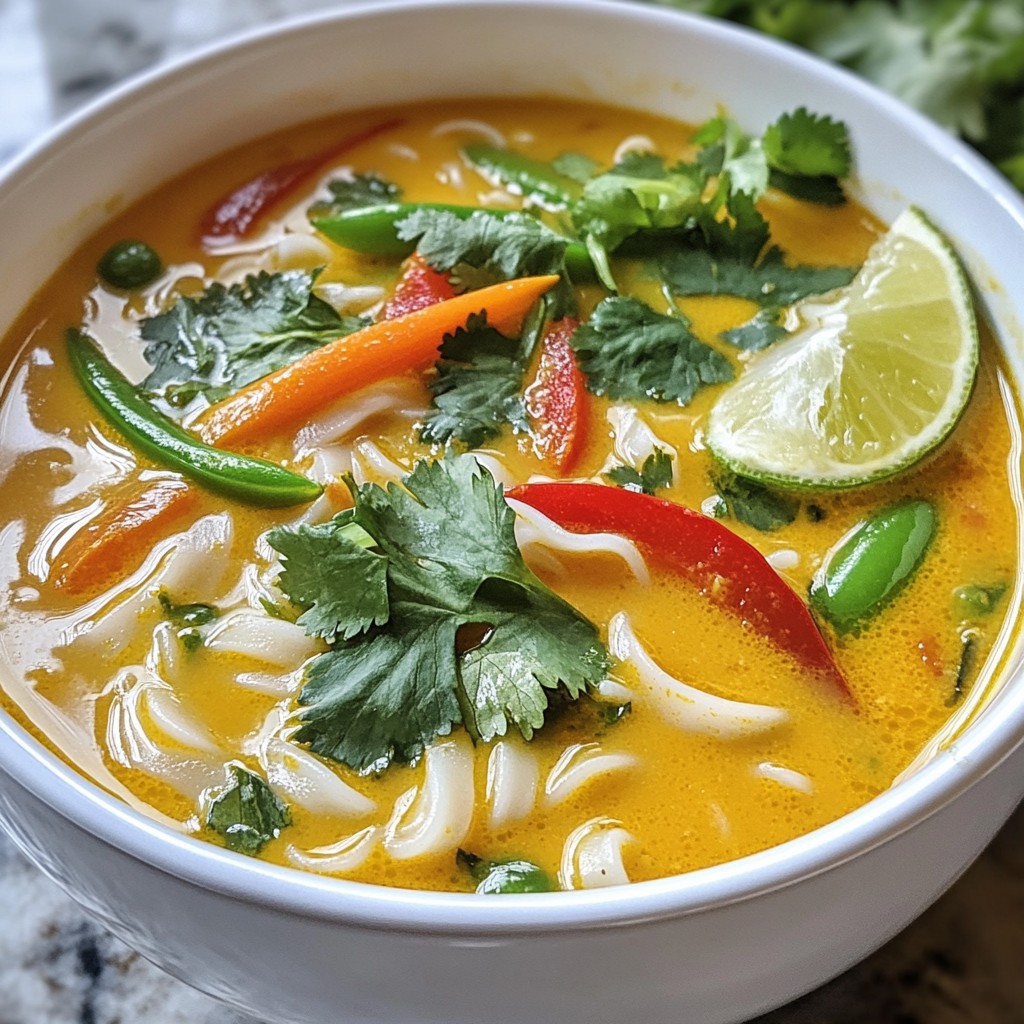
Are you ready to dive into a bowl of warm, rich comfort? My Thai Coconut Curry Noodle Soup is both flavorful and easy to make. In just a few steps, you can create a delicious meal that warms your heart and soul. Whether you're cooking for yourself or sharing with loved ones, this recipe is sure to impress. Let’s get started on this tasty adventure!
Why I Love This Recipe
- Easy to Prepare: This Thai Coconut Curry Noodle Soup comes together in just 30 minutes, making it perfect for a quick weeknight dinner.
- Flavor Explosion: The combination of coconut milk and red curry paste creates a rich and creamy base that is both comforting and delicious.
- Nutritious Ingredients: Packed with vegetables and chickpeas, this soup is not only tasty but also nourishing and satisfying.
- Customizable: You can easily modify the veggies or add protein like tofu or shrimp to suit your taste preferences.
Ingredients
Complete List of Ingredients
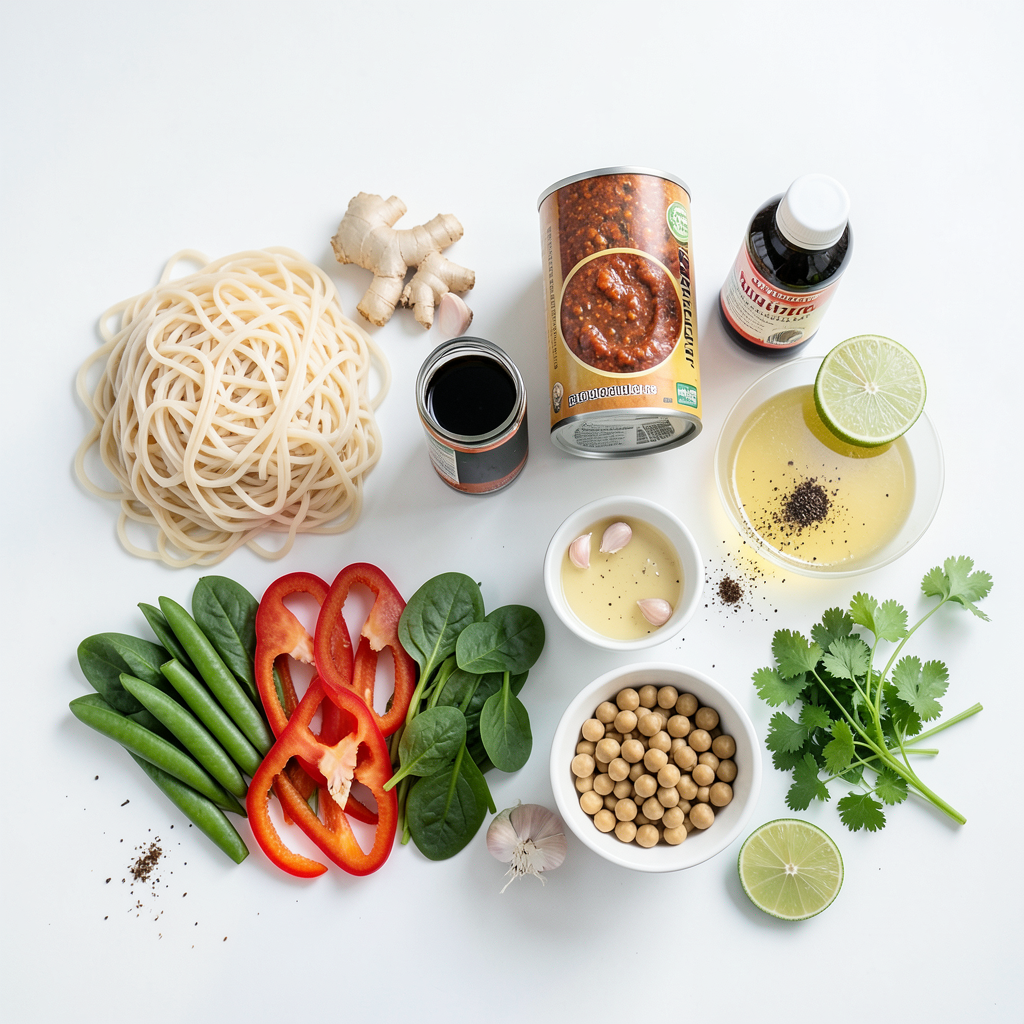
To make Thai Coconut Curry Noodle Soup, gather these ingredients:
- 200g rice noodles
- 1 can (400ml) coconut milk
- 2 tablespoons red curry paste
- 4 cups vegetable broth
- 1 cup canned chickpeas, drained and rinsed
- 1 red bell pepper, sliced
- 1 cup snap peas
- 1 cup baby spinach
- 1 tablespoon lime juice
- 2 tablespoons soy sauce
- 1 tablespoon fresh ginger, minced
- 2 cloves garlic, minced
- Fresh cilantro, for garnish
- Lime wedges, for serving
- Salt and pepper to taste
These ingredients create a rich and creamy soup that bursts with flavor.
Optional Ingredients for Customization
You can customize your soup with these optional ingredients:
- Tofu for added protein
- Carrots for extra crunch
- Mushrooms for more depth
- Chopped green onions for garnish
- Fresh basil for an aromatic touch
Adding these can change the flavor and texture, making it your own.
Nutritional Information Breakdown
Here’s a quick look at the nutritional value per serving:
- Calories: Approximately 350
- Protein: 10g
- Carbohydrates: 50g
- Fat: 15g
- Fiber: 9g
This soup is a healthy choice, packed with nutrients. It’s filling and satisfying while keeping the flavors vibrant. Enjoy creating and sharing this delightful dish!
Step-by-Step Instructions
Preparation of Rice Noodles
First, we need to prepare the rice noodles. Start by boiling water in a pot. Once the water is bubbling, add the 200g of rice noodles. Cook them based on the package instructions, usually for about 4 to 7 minutes. Stir them gently to prevent sticking. When they are tender, drain them and set them aside. This way, they will be ready for the soup.
Making the Curry Base
Next, let’s make the curry base. Grab a large pot and heat one tablespoon of oil over medium heat. When the oil is hot, add two cloves of minced garlic and one tablespoon of minced ginger. Cook these for about one minute until they smell amazing. Then, it’s time to add two tablespoons of red curry paste. Stir this mix for another minute. This step helps to bring out all the flavors.
After that, pour in four cups of vegetable broth and one can of coconut milk. Stir well to combine everything. As the mixture heats, you will notice it starting to simmer. This is a good sign!
Combining Ingredients for the Soup
Now, let’s add the veggies and chickpeas. Add one sliced red bell pepper, one cup of snap peas, and one cup of canned chickpeas that you drained and rinsed. Let this mixture simmer for about 5 to 7 minutes. You want the veggies to be tender but still crisp.
Then, stir in one tablespoon of lime juice and two tablespoons of soy sauce. Season with salt and pepper to taste. Finally, add one cup of baby spinach and let it wilt for about 1 to 2 minutes.
Now it’s time to serve! Divide the cooked rice noodles into bowls and ladle the hot curry soup over them. Top with fresh cilantro and serve with lime wedges. Enjoy this tasty dish!
Tips & Tricks
Tips for Perfecting Flavor
To boost the flavor of your Thai coconut curry noodle soup, use fresh herbs. Fresh cilantro adds a bright taste. Always taste your soup before serving. Adjust the salt and lime juice as needed. If you want more heat, add extra red curry paste. For a richer flavor, cook the garlic and ginger longer before adding the paste.
Common Mistakes to Avoid
One common mistake is overcooking the vegetables. They should be tender but still crisp. Another mistake is not rinsing the chickpeas. Rinsing them helps remove extra salt and improves the taste. Also, don’t skip the lime juice. It adds a fresh zing that balances the rich coconut milk.
Serving Suggestions
Serve the soup hot in deep bowls. Top with fresh cilantro and lime wedges. You can also add crushed peanuts for a crunchy texture. Pair it with a side of rice for a fuller meal. Don’t forget to provide extra chili flakes for those who enjoy a spicy kick!
Pro Tips
- Use Fresh Ingredients: Fresh vegetables and herbs will enhance the flavor of your curry soup, making it more aromatic and vibrant.
- Adjust the Spice Level: Feel free to adjust the amount of red curry paste according to your spice preference. Start with less and add more until you reach your desired heat.
- Customize Your Vegetables: Swap in your favorite vegetables like zucchini, mushrooms, or broccoli to suit your taste or what you have on hand.
- Leftover Storage: This soup can be stored in the fridge for up to 3 days. Just keep the noodles separate until you're ready to serve to avoid them getting soggy.
Variations
Vegetarian or Vegan Modifications
You can easily make this soup vegetarian or vegan. Simply skip the chickpeas if you prefer. Use tofu instead for protein. For a richer flavor, add extra vegetables. You can use mushrooms or eggplant. These will add depth to the dish without meat.
Adding Proteins to the Dish
If you want more protein, chicken or shrimp works well. Cook the meat in the pot before adding the curry paste. If you like beef, thinly slice it and add it with the veggies. This way, the meat absorbs the rich flavors of the curry.
Alternative Vegetables to Include
Feel free to mix in different vegetables. Carrots or zucchini can add nice texture. Broccoli or cauliflower will also work well. These vegetables cook quickly and keep their crunch. Just be sure to adjust the cooking time. You want everything to be tender yet crisp for the best bite.
Storage Info
How to Store Leftovers
To store leftovers, let the soup cool down first. Then, place it in an airtight container. You can keep it in the fridge for up to three days. If you have extra rice noodles, store them separately. This keeps them from getting soggy.
Reheating Instructions
When you’re ready to eat, you can reheat the soup on the stove or in the microwave. If using the stove, pour the soup into a pot. Heat it over low to medium heat. Stir often to avoid burning. If using a microwave, heat it in short bursts. Stir in between to ensure even heating.
Freezing Tips for Long-Term Storage
For long-term storage, freezing is a great option. First, cool the soup completely. Then, pour it into freezer-safe bags or containers. Leave some space for expansion. You can freeze it for up to three months. When you want to eat it, thaw the soup in the fridge overnight. Reheat as mentioned above before serving.
FAQs
Can I use other types of noodles?
Yes, you can use different noodles. Try egg noodles, udon, or soba. Each type adds a unique taste and texture. Just adjust cooking times as needed. Rice noodles are light and absorb flavors well, but others work too. Experimenting with noodles can change your soup's vibe.
How can I make it spicier?
To add heat, use extra red curry paste. You can also add chopped fresh chili peppers. Thai bird’s eye chilies are great for a fiery kick. If you prefer a milder spice, try adding sriracha or chili flakes. Start small and adjust until you find your perfect heat level.
What can I substitute for coconut milk?
If you need a substitute, try almond milk or soy milk. For creaminess, blend silken tofu with water. This gives a similar texture, but the flavor will differ. You can also use cashew cream for a rich, nutty taste. Keep in mind that these options may change the soup's flavor.
This blog covers making a delicious soup with rice noodles and curry. You learned about essential ingredients, optional add-ins, and nutrition facts. The step-by-step directions guide you from noodles to the perfect soup. We shared tips for great flavor and common mistakes to avoid. You can also explore tasty variations and storage methods.
Enjoy your meal, get creative, and make it your own. Happy cooking!