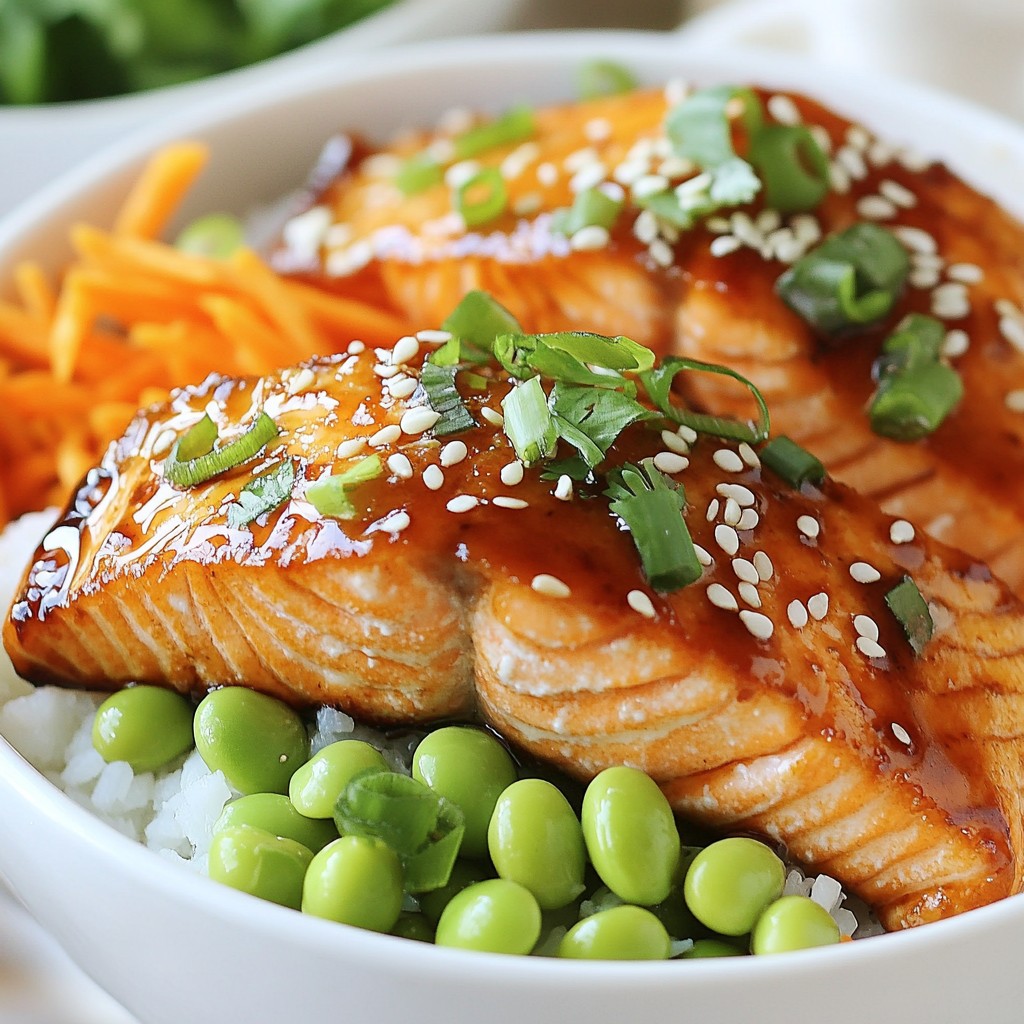
Looking for a tasty and easy meal? My Teriyaki Salmon Rice Bowls have you covered! With just a few simple ingredients, you can whip up a dish that’s both flavorful and satisfying. Imagine tender salmon paired with fluffy rice and fresh veggies, all drizzled with homemade teriyaki sauce. In just one bowl, you'll find a perfect balance of taste and nutrition. Ready to impress your family? Let’s dive in!
Why I Love This Recipe
- Delicious Flavor Combination: The balance of sweet, savory, and umami from the teriyaki sauce perfectly complements the rich flavor of the salmon.
- Easy to Prepare: This recipe is straightforward and doesn't require advanced cooking skills, making it accessible for everyone.
- Healthy Ingredients: Packed with protein from salmon and nutrients from vegetables, this dish is a wholesome meal choice.
- Customizable: You can easily modify the vegetables or add your favorite toppings to suit your taste preferences.
Ingredients
Main Ingredients
- 2 salmon fillets (about 6 oz each)
- 1 cup sushi rice (or jasmine rice)
- 2 cups water
Teriyaki Sauce Ingredients
- 1/4 cup soy sauce (low sodium preferred)
- 2 tablespoons honey or maple syrup
- 1 tablespoon rice vinegar
Fresh Vegetable Add-ins
- 1/2 cup edamame, shelled
- 1 carrot, julienned
- 2 green onions, sliced
- Sesame seeds for garnish
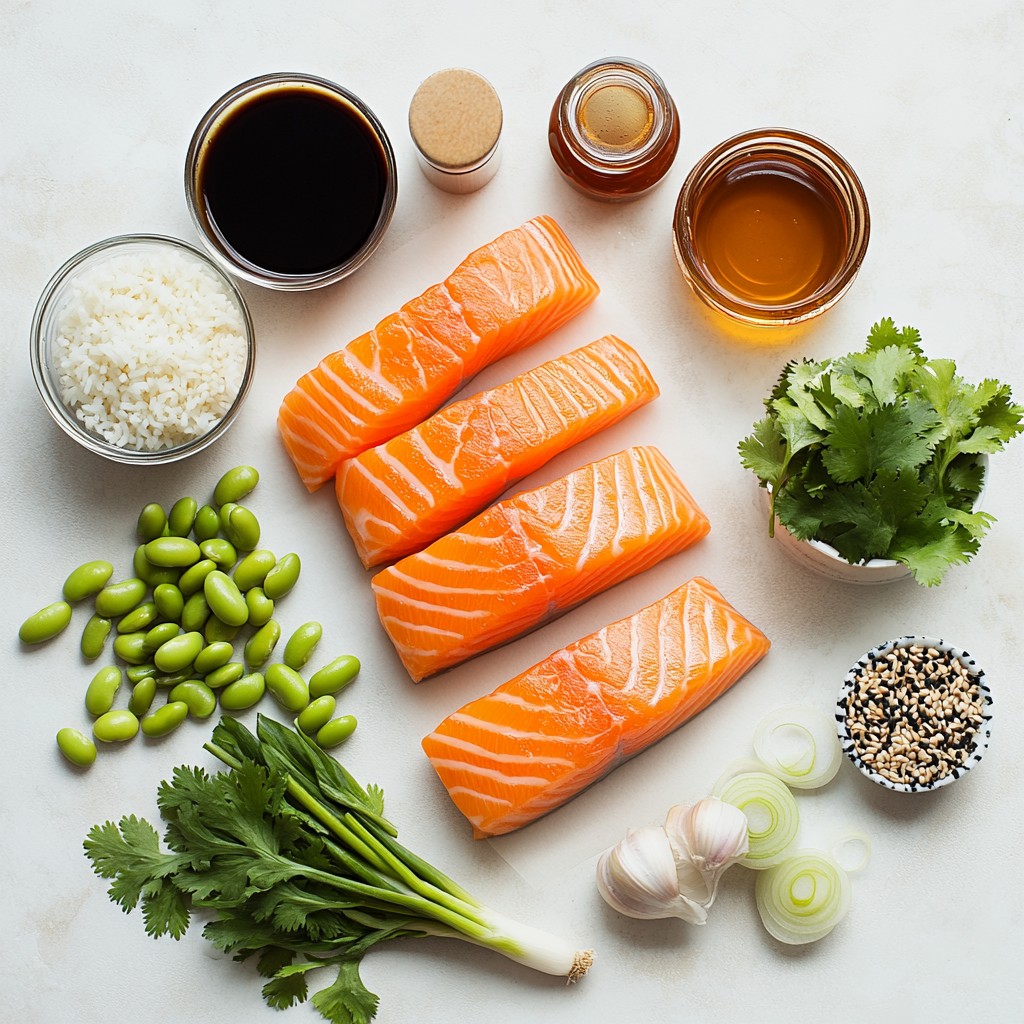
Gather these ingredients to create your teriyaki salmon rice bowls. Each item plays a key role in flavor and texture. The salmon fillets are rich and buttery. Sushi rice gives a sticky and satisfying base. Water helps to cook the rice perfectly.
For the teriyaki sauce, soy sauce adds saltiness. Honey or maple syrup brings sweetness. Rice vinegar gives a nice tang. Together, they create a balanced sauce that coats the salmon well.
Fresh vegetables add color and crunch. Edamame offers a nice pop of protein. Julienned carrots add sweetness and bright color. Green onions give a mild onion flavor that brightens every bite. Finally, sesame seeds provide a nice crunch for garnish.
These ingredients make the dish not only tasty but also visually appealing. Enjoy your cooking adventure!
Step-by-Step Instructions
Preparing the Rice
1. Rinse sushi rice: Start by rinsing the sushi rice under cold water. This helps remove extra starch. Rinse until the water runs clear. This step is key to fluffy rice.
2. Cooking the rice: In a medium saucepan, combine 1 cup of rice with 2 cups of water. Bring this mixture to a boil. Once it boils, reduce the heat to a simmer. Cover the pot and cook for about 15 minutes. The rice should absorb all the water. After cooking, let it stand for 5 minutes. Finally, fluff it with a fork to separate the grains.
Making the Teriyaki Sauce
1. Combine ingredients in saucepan: In a small saucepan over medium heat, mix together the following: 1/4 cup soy sauce, 2 tablespoons honey or maple syrup, 1 tablespoon rice vinegar, 1 teaspoon sesame oil, 1 tablespoon grated ginger, and 1 minced garlic clove.
2. Simmer and thicken: Stir the mixture well. Bring it to a light simmer. Let it cook for about 5 minutes until it thickens slightly. This sauce adds a sweet and savory flavor to your salmon.
Cooking the Salmon
1. Preheat skillet and season salmon: Preheat a non-stick skillet over medium-high heat. While the skillet heats up, season 2 salmon fillets with a little salt.
2. Sear salmon fillets and glaze with teriyaki sauce: Once the skillet is hot, place the salmon fillets skin-side down. Sear for 4-5 minutes on each side or until cooked to your liking. In the last minute, drizzle some teriyaki sauce over the fillets. This gives them a nice glaze and extra flavor.
Tips & Tricks
Perfecting the Rice
To make the best sushi rice, use a 1:2 water-to-rice ratio. For every cup of sushi rice, add two cups of water. Rinse the rice until the water runs clear. This removes excess starch. After cooking, let the rice sit for five minutes. Fluff it gently with a fork. This keeps the rice light and airy.
Enhancing the Teriyaki Flavor
You can switch up the teriyaki sauce. Try adding orange juice for a citrus twist. If you want a thicker sauce, cook it a bit longer. Adjust the sweetness by adding more honey or maple syrup based on your taste. The key is to balance the sweet and salty flavors.
Cooking the Salmon
When cooking salmon, you can choose skin-on or skin-off. Skin-on adds flavor and helps keep the fish moist. If using skin-off, watch the cooking time closely. Check for doneness by looking for a pale pink color inside. Use a fork to flake the fish. It should separate easily when done.
Pro Tips
- Perfectly Cooked Salmon: To achieve perfectly cooked salmon, use a food thermometer. The salmon should reach an internal temperature of 145°F for optimal flavor and texture.
- Flavor Boost: Marinate the salmon in the teriyaki sauce for 30 minutes before cooking. This allows the flavors to penetrate the fish, resulting in a richer taste.
- Rice Cooking Tip: For extra flavor in your rice, consider cooking it in vegetable broth instead of water. This will enhance the overall taste of your dish.
- Vegetable Variations: Feel free to mix and match the vegetables according to your preference. Bell peppers, cucumbers, or snap peas make great additions to your rice bowls.
Variations
Different Protein Options
You can switch salmon with chicken or tofu. Chicken thighs work well; they stay juicy. Tofu is a great choice for a vegetarian meal. Press and cube firm tofu, then sear it until golden. Each protein offers a unique taste and texture.
Flavor Enhancements
To kick up the flavor, add spices. A sprinkle of chili flakes adds heat. You might also squeeze some lime or lemon juice for brightness. Top your bowl with avocado slices or pickled ginger for a fun twist. These extras make the meal exciting and fresh.
Dietary Modifications
If you need gluten-free options, use tamari instead of soy sauce. This keeps the taste while making it safe. For low-carb or keto diets, swap rice for cauliflower rice. It adds a similar texture while lowering carbs. These tweaks make the dish fit various diets without losing flavor.
Storage Info
Storing Leftovers
To keep your teriyaki salmon rice bowls fresh, store them in airtight containers. This method prevents moisture loss and keeps flavors intact. You can refrigerate the leftovers for up to three days. Make sure to let the food cool before sealing the container. This helps avoid condensation, which can make the rice soggy.
Reheating Instructions
For the best taste, reheat the salmon in a skillet over low heat. This keeps the fish moist and prevents it from drying out. You can also use the microwave, but do so in short bursts to avoid overcooking. For rice and vegetables, add a splash of water before microwaving. This helps steam them and keeps them fluffy.
Freezing Options
Yes, you can freeze this dish. For freezing, let the salmon and rice cool completely. Then, pack them in freezer-safe bags or containers. Label the bags with the date. They can be frozen for up to three months. To thaw, place the container in the fridge overnight. For quick thawing, use the microwave on the defrost setting.
FAQs
How do I know when the salmon is cooked?
To check if salmon is cooked, you can use a food thermometer. The internal temperature should reach 145°F (63°C). If you don’t have a thermometer, look for visual signs. The flesh should change from translucent to opaque. It should also flake easily with a fork.
Can I use brown rice instead of sushi rice?
Yes, you can use brown rice. Just remember that brown rice takes longer to cook. You will need about 2 1/2 cups of water for 1 cup of brown rice. Cook it for about 40-45 minutes instead of 15 minutes.
What can I serve with Teriyaki Salmon Rice Bowls?
You can serve many great sides. Try steamed broccoli or a fresh cucumber salad. Edamame is also a good match. For drinks, green tea pairs nicely with this dish. A light white wine can also enhance the meal.
In this blog post, we explored how to create delicious teriyaki salmon rice bowls. We broke down the main ingredients, steps to prepare rice and salmon, and crafted a tasty teriyaki sauce. You learned tips to perfect your dish and variations for different diets. Remember, cooking should be fun and creative. Don't be afraid to adjust recipes to suit your taste. Enjoy trying new ingredients and flavors. Make your meals joyful and satisfying!