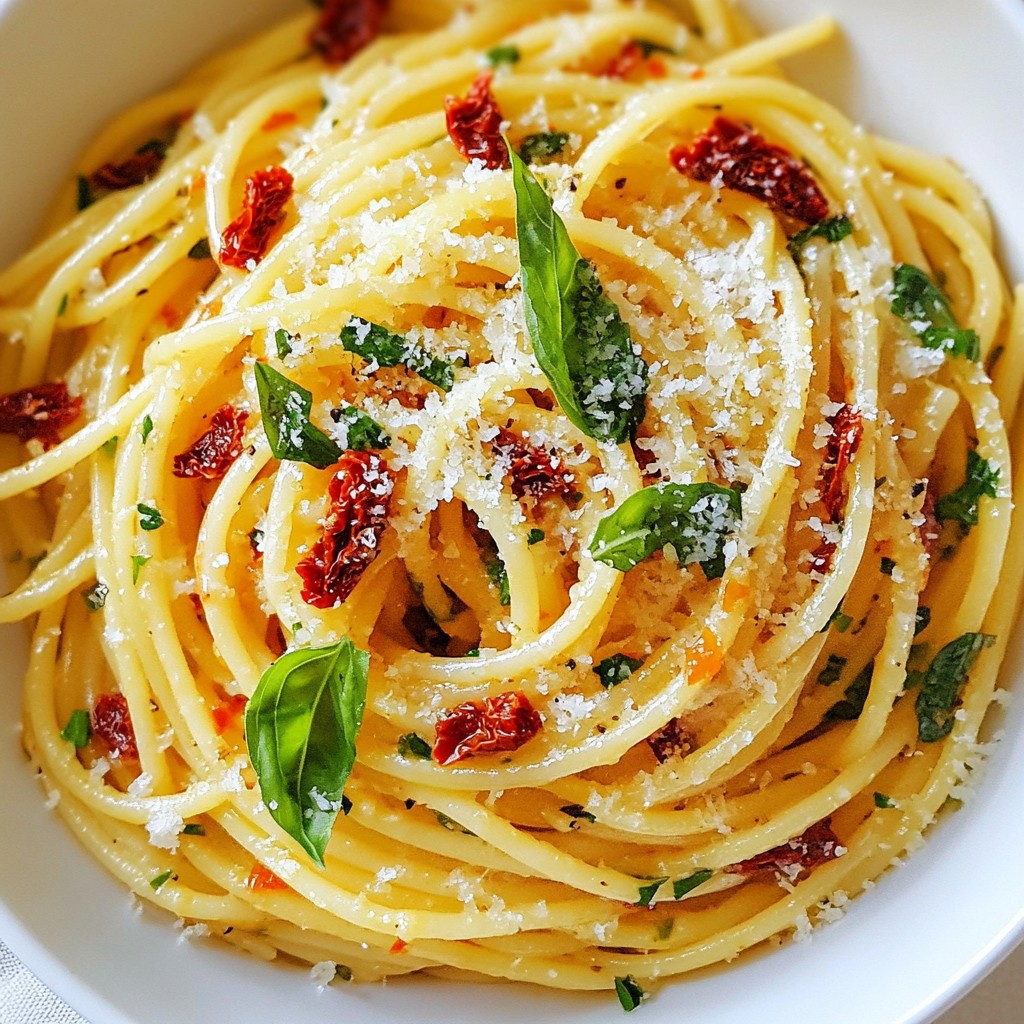
Looking for a quick and tasty dinner? I’m excited to share my Sun Dried Tomato Basil Pasta recipe! This dish mixes rich flavors with easy steps. You only need a few simple ingredients to create a plate full of yum. Whether you want a creamy sauce or add a protein, this recipe has you covered. Get ready to delight your taste buds with this flavorful dinner!
Why I Love This Recipe
- Quick and Easy: This pasta dish can be prepared in just 25 minutes, making it perfect for busy weeknights or last-minute dinner parties.
- Rich and Creamy Flavor: The combination of heavy cream and Parmesan cheese creates a luscious sauce that coats the pasta beautifully.
- Fresh Ingredients: With sun-dried tomatoes and fresh basil, this recipe brings vibrant flavors and colors to your plate.
- Customizable: Add some crushed red pepper for a spicy kick or toss in your favorite vegetables to make it your own!
Ingredients
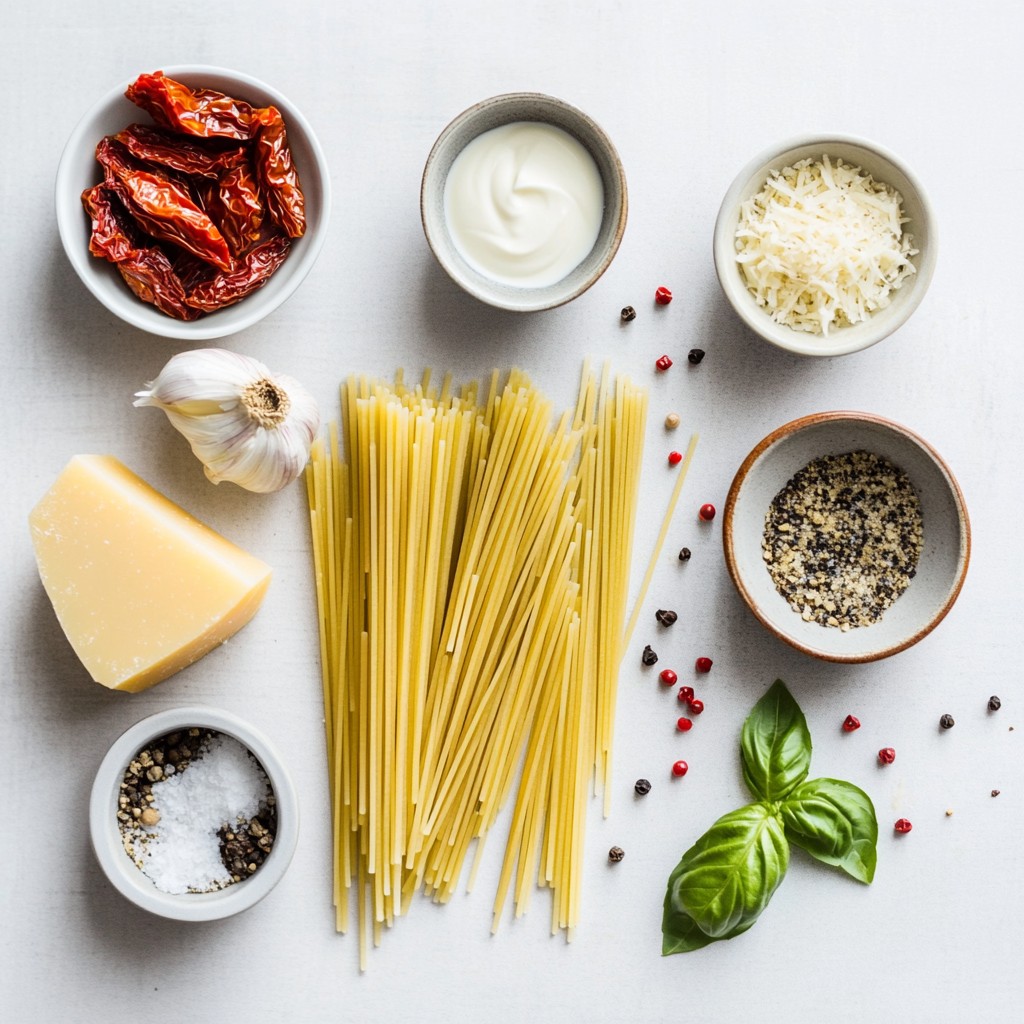
List of Ingredients
- 8 ounces spaghetti or your favorite pasta
- 1 cup sun-dried tomatoes, finely chopped (in oil is best)
- 1/4 cup fresh basil leaves, chopped
- 3 cloves garlic, minced
- 1/2 cup heavy cream
- 1/4 cup grated Parmesan cheese
- 2 tablespoons olive oil
- Salt and pepper to taste
- Optional: Crushed red pepper for a spicy kick
Substitutions for Ingredients
You can swap spaghetti for any pasta shape you like. Penne or fettuccine work well too. For a lighter option, use whole wheat or gluten-free pasta. If you can't find sun-dried tomatoes in oil, check for plain ones and add a bit more olive oil in the recipe. You can use a mix of dried and fresh basil if fresh is hard to find. If you want a dairy-free dish, use coconut cream or cashew cream instead of heavy cream.
Tips for Choosing Quality Ingredients
When picking sun-dried tomatoes, look for ones packed in oil. They will be softer and richer in flavor. Fresh basil should smell sweet and bright; avoid any that look wilted or brown. Use garlic that is firm and has no sprouts for the best taste. For cheese, choose a good-quality Parmesan. It adds that cheesy depth to the dish. Always use fresh pasta if you can find it. It cooks faster and adds a lovely texture to your meal.
Step-by-Step Instructions
Cooking the Pasta
Start by bringing a large pot of salted water to a boil. Add 8 ounces of spaghetti or your favorite pasta. Follow the package instructions to cook it until it is al dente. This usually takes about 8 to 10 minutes. Remember to reserve 1/2 cup of pasta water before draining the pasta. Set the drained pasta aside for later.
Preparing the Sauce
In a large skillet, heat 2 tablespoons of olive oil over medium heat. Once the oil is hot, add 3 minced garlic cloves. Sauté them until fragrant, which takes about 1 minute. Be careful not to burn the garlic. Next, add 1 cup of finely chopped sun-dried tomatoes. Stir them into the garlic oil and cook for 2 more minutes. Pour in 1/2 cup of heavy cream and stir well. Lower the heat and let it simmer for 3 to 4 minutes until it thickens slightly. Stir in 1/4 cup of grated Parmesan cheese until it melts into the sauce. If your sauce becomes too thick, mix in some reserved pasta water until it reaches your desired creaminess.
Combining and Serving the Dish
Add the cooked pasta to the skillet with the sauce. Toss everything together so the pasta gets well-coated. Then, add 1/4 cup of chopped fresh basil. Mix again until everything is heated through. Season with salt and pepper to taste. If you like some heat, sprinkle in crushed red pepper. Let the dish rest for a minute before serving. For a nice presentation, serve in shallow bowls with extra basil and a sprinkle of Parmesan on top. Enjoy with garlic bread for a complete meal!
Tips & Tricks
How to Avoid Overcooked Pasta
To avoid overcooked pasta, start by using a large pot. Fill it with water and add salt. Bring it to a rolling boil before adding the pasta. Stir the pasta right after you add it. This helps keep it from sticking together. Check the pasta a minute before the package says it is done. You want it al dente, which means it should have a little bite. If you overcook it, the pasta will turn mushy. Remember, you can always cook it more later if needed.
Making a Creamier Sauce
For a creamier sauce, choose heavy cream as your base. It gives the sauce a rich texture. Heat the cream slowly in your skillet. If it bubbles too much, it can separate. Stir it often as you add the cheese. Grated Parmesan melts easily and adds flavor. If the sauce is too thick, mix in some of the reserved pasta water. This helps create the perfect creamy consistency that clings to the pasta.
Adding Flavor Enhancers
To boost flavor, don't skip the garlic. Sauté it until it’s fragrant, but watch closely to avoid burning. You can also add crushed red pepper for a spicy touch. Chopped sun-dried tomatoes pack a punch of flavor. Fresh basil adds a nice, bright note at the end. For a twist, consider adding olives or capers. These little additions can change the whole dish. Experiment with what you like best!
Pro Tips
- Use Quality Ingredients: Choosing high-quality sun-dried tomatoes and fresh basil will elevate the flavor of your dish significantly.
- Don't Skip the Pasta Water: The reserved pasta water contains starch that helps the sauce cling to the pasta, enhancing the overall texture.
- Customize the Spice Level: Adjust the amount of crushed red pepper based on your preference for heat—start with a little and add more as needed.
- Let It Rest: Allowing the pasta to sit for a minute after mixing with the sauce helps the flavors meld together beautifully.
Variations
Vegetarian Modifications
To make this dish vegetarian, simply skip the meat. The sun-dried tomatoes and fresh basil already add lots of flavor. You can also add more veggies like spinach or mushrooms. These will give you extra nutrients and taste. Just sauté them with the garlic for a few minutes before adding the cream.
Protein Additions (Chicken, Shrimp, etc.)
If you want to add protein, chicken or shrimp works great. For chicken, use cooked and diced pieces. Just mix them in with the pasta at the end. For shrimp, sauté them in the skillet before the garlic. Cook until they turn pink, then follow the rest of the sauce steps. Both options will make your meal more filling.
Gluten-Free Alternatives
For a gluten-free version, swap traditional pasta for gluten-free pasta. Many brands offer great options that cook well. Brown rice or lentil pasta are good choices. Just make sure to check the cooking time, as it can vary. This way, everyone can enjoy this tasty dish without gluten worries.
Storage Info
How to Store Leftovers
Store any leftover Sun Dried Tomato Basil Pasta in an airtight container. Make sure it cools to room temperature first. Keep it in the fridge for up to three days. The flavors will deepen as it sits. If you want to keep it longer, freezing is a good option.
Reheating Instructions
To reheat, you can use the microwave or stovetop. If using a microwave, place the pasta in a bowl and cover it. Add a splash of water or cream to keep it moist. Heat in short bursts, stirring in between. On the stovetop, warm it in a skillet over low heat. Stir often and add more liquid if needed. This helps keep the pasta creamy.
Freezing Suggestions
To freeze, first let the pasta cool completely. Portion it into freezer-safe bags or containers. Remove as much air as possible to prevent freezer burn. It will stay fresh for up to three months. When ready to eat, thaw it in the fridge overnight. Reheat as mentioned above for the best taste.
FAQs
What is the best type of pasta for this recipe?
I recommend using spaghetti for this dish. Spaghetti holds the sauce well. You can also try fettuccine or penne if you prefer. Just cook it al dente for the best texture. The pasta should have a nice bite.
Can I use dried basil instead of fresh?
Yes, you can use dried basil if fresh isn't available. Use about one teaspoon of dried basil. It packs a lot of flavor, but fresh basil is best. Fresh basil adds a bright taste and aroma. If you can, always go for fresh!
How can I make this pasta dish vegan?
To make this dish vegan, swap the heavy cream for coconut cream or cashew cream. Use nutritional yeast instead of Parmesan cheese for a cheesy flavor. You can also add more veggies for texture. This will keep the dish creamy and delicious without dairy.
This blog covers how to create a great pasta dish from start to finish. We explored the key ingredients, offered helpful tips, and shared tasty variations. Remember, choosing good ingredients makes a big difference. Avoid overcooked pasta by timing it well, and don't skip flavor enhancers! For leftovers, store them properly to enjoy later. Pasta is versatile, so feel free to adjust it to your taste. With these steps, you can make a wonderful meal that fits your needs. Enjoy your cooking!