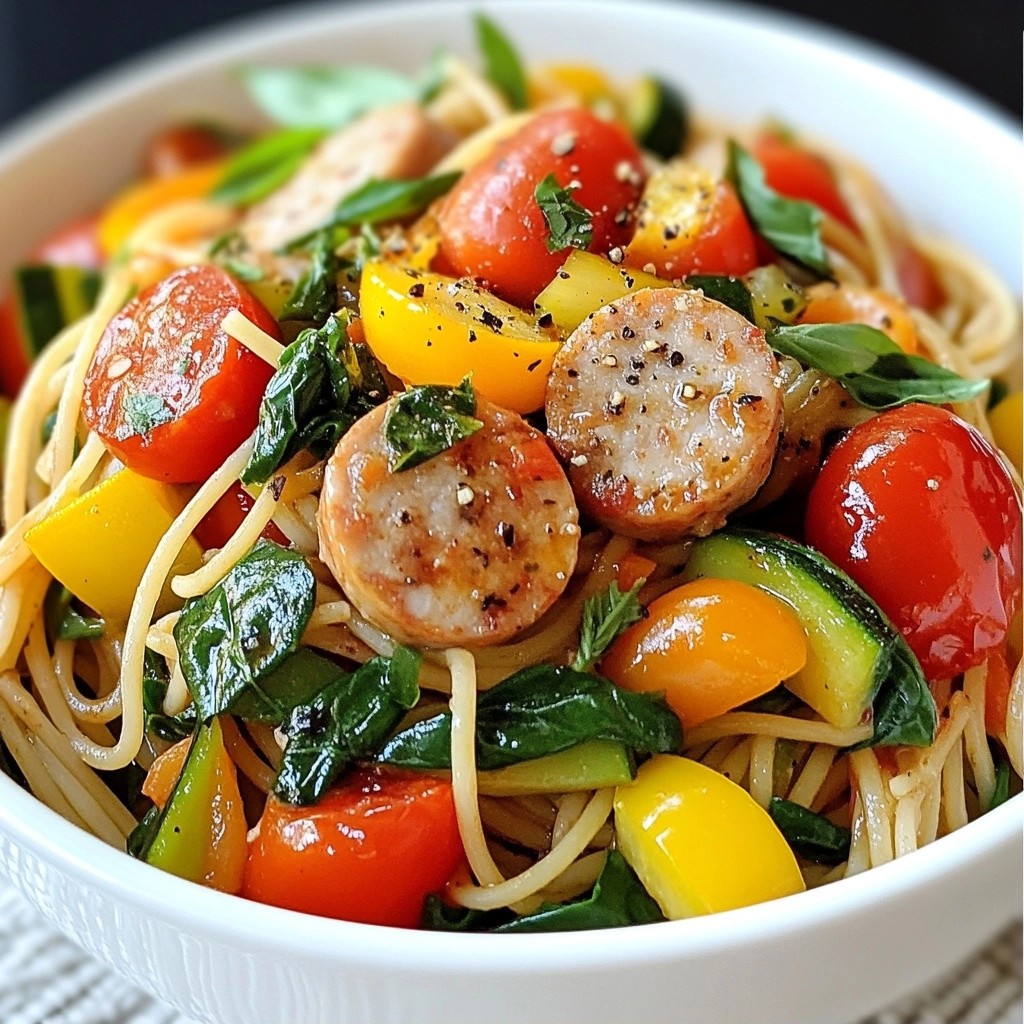
Are you craving a quick and tasty meal? Look no further! This Quick Veggie and Chicken Sausage Spaghetti Delight is packed with flavor and good-for-you ingredients. You can whip it up in no time, making it perfect for busy weeknights. In this guide, I’ll share easy steps, tips for perfect texture, and fun variations to suit your taste. Let’s dive into a dish that you’ll love!
Why I Love This Recipe
- Quick and Easy: This recipe comes together in just 25 minutes, making it perfect for busy weeknights.
- Healthy Ingredients: Packed with fresh veggies and lean protein, this dish is a nutritious choice.
- Flavorful Combination: The blend of Italian seasoning, garlic, and fresh basil adds a burst of flavor to every bite.
- Versatile Recipe: Feel free to swap in your favorite veggies or protein to customize it to your taste.
Ingredients
List of Ingredients
- 8 oz spaghetti (whole wheat or gluten-free)
- 2 chicken sausages, sliced
- 1 cup cherry tomatoes, halved
- 1 zucchini, diced
- 1 bell pepper (any color), diced
- 2 cups fresh spinach
- 2 cloves garlic, minced
- 2 tablespoons olive oil
- 1 teaspoon Italian seasoning
- Salt and pepper to taste
- Fresh basil leaves for garnish (optional)
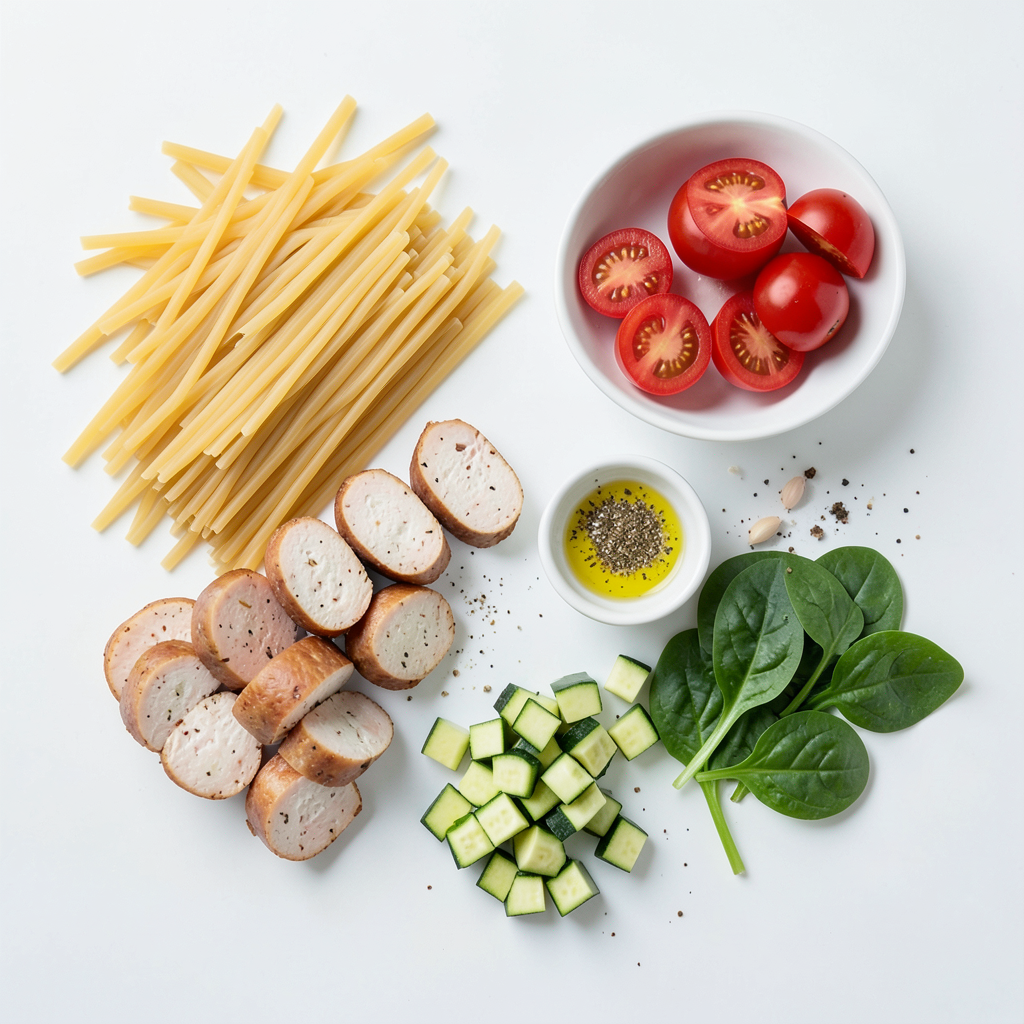
For this dish, you can choose between whole wheat or gluten-free spaghetti. Whole wheat adds a nice nutty flavor, while gluten-free options cater to specific diets. Chicken sausage is a great choice here. It adds protein and flavor without being too heavy.
Next, let’s talk about the veggies. Fresh cherry tomatoes bring sweetness, and zucchini adds a lovely texture. The bell pepper gives a nice crunch, and fresh spinach is packed with nutrients.
For seasoning, I use olive oil for sautéing. It gives a rich flavor and helps the ingredients mix well. Italian seasoning adds depth and a hint of herbs. Don’t forget salt and pepper to taste. They elevate the whole dish!
Feel free to add fresh basil as a garnish. It not only looks good but also adds a fresh kick. Enjoy creating your Quick Veggie and Chicken Sausage Spaghetti!
Step-by-Step Instructions
Preparation Steps
1. Cooking spaghetti al dente
Start by boiling a large pot of salted water. Add the spaghetti and cook it according to the package instructions. Make sure it is al dente, which means it should be firm but not hard. After cooking, drain the pasta and set it aside. Don’t forget to save half a cup of the pasta water for later.
2. Sautéing chicken sausage
In a large skillet, heat two tablespoons of olive oil over medium heat. Once the oil is hot, add the sliced chicken sausages. Sauté them for about 3 to 4 minutes. You want them to start browning and get some nice color.
3. Incorporating garlic and vegetables
Add two minced garlic cloves to the skillet. Stir the garlic for about 30 seconds until you smell that lovely aroma. Next, toss in one diced zucchini and one diced bell pepper. Stir-fry the vegetables for 4 to 5 minutes. You want them to soften but keep some crunch. After that, add one cup of halved cherry tomatoes. Cook for another 2 minutes until the tomatoes start breaking down. Finally, stir in two cups of fresh spinach and a teaspoon of Italian seasoning. Cook until the spinach wilts.
Final Mixing and Serving
1. Combining everything in the skillet
Now it’s time to mix everything! Add the cooked spaghetti to the skillet with the sausage and veggies. Pour in the reserved pasta water as needed. This helps everything blend together smoothly.
2. Seasoning adjustments
Taste your dish and add salt and pepper to your liking. Make sure the flavors are well balanced. Toss everything together to ensure the pasta is coated with the delicious mixture.
3. Garnishing tips
Serve your spaghetti hot. If you like, add fresh basil leaves on top for a burst of flavor and color. It makes the dish look even more inviting!
Tips & Tricks
Cooking Tips
To get the perfect spaghetti texture, cook it al dente. This means it should be firm but not hard. Follow the package instructions carefully. I like to use salted water for better taste. Remember to save some pasta water. It helps blend the sauce later.
When sautéing chicken sausage, heat your skillet first. Use medium heat and add olive oil. This helps the sausage brown nicely. Cook for 3-4 minutes until golden. Stir often to cook evenly. Add garlic after the sausage has a nice color. It adds a great flavor.
Flavor Enhancements
For extra flavor, consider adding red pepper flakes or lemon juice. These spices can brighten the dish. You can also add a pinch of smoked paprika for depth. Just a little goes a long way.
Fresh herbs can make a big difference. Try adding chopped parsley or oregano. They add freshness and color. Basil is great too, especially on top as a garnish. It ties the whole dish together.
Pro Tips
- Use Fresh Ingredients: Fresh vegetables and herbs can enhance the flavor and nutritional value of your dish. Opt for seasonal produce whenever possible.
- Don't Overcook the Pasta: Cooking the spaghetti until al dente ensures it retains a firm texture and prevents it from becoming mushy when combined with the sauce.
- Adjust the Seasoning: Tasting and adjusting the seasoning at the end will help you achieve the perfect balance of flavors. Don't be afraid to add more salt or pepper if needed.
- Make It Your Own: Feel free to add other vegetables or protein sources, like bell peppers or chickpeas, to customize the recipe to your taste preferences.
Variations
Ingredient Substitutes
If you want to change up the chicken sausage, you have a few options. Try turkey sausage for a leaner choice. You can use pork sausage for a richer flavor. If you prefer something plant-based, use veggie sausage. These swaps keep the dish tasty.
For veggies, feel free to mix in what you love. You can add mushrooms for a nice earthy taste. Broccoli or asparagus works well, too. Carrots add a sweet crunch that brightens the meal. The key is to use fresh veggies for the best flavor.
Dietary Modifications
If you want to make this dish vegetarian or vegan, simply skip the sausage. You can add extra beans or lentils for protein. Tofu is a great option too, as it soaks up flavors well. Just sauté it until it’s golden.
For those who need gluten-free options, choose gluten-free pasta. Many brands offer great taste and texture. You can also try spiralized veggies like zucchini or carrots for a fun twist. They add color and nutrients without the carbs.
Storage Info
Short-Term Storage
To store leftovers, let the spaghetti cool. Place it in an airtight container. Make sure to separate the sauce from the pasta to keep everything fresh. This way, it will stay tasty for up to three days in the fridge. If you want to keep it longer, consider freezing it. Just make sure to use freezer-safe containers.
Reheating Instructions
For reheating, the best method is the stovetop. Heat a skillet over medium heat. Add a splash of olive oil or a bit of water. Then, add your spaghetti and cover it. Stir often to heat it evenly. You can also use a microwave. Just cover the dish and heat it in short bursts, stirring in between. This keeps the pasta from drying out. Enjoy your meal again!
FAQs
How long does the spaghetti last in the fridge?
Your spaghetti lasts up to four days in the fridge. Store it in an airtight container. This keeps it fresh and tasty for your next meal.
Can I freeze quick veggie and chicken sausage spaghetti?
Yes, you can freeze this dish. Use a freezer-safe container and store it for up to three months. Just thaw it in the fridge before reheating.
What type of chicken sausage is best for this recipe?
Look for chicken sausage that is fully cooked. I like using varieties with herbs for extra flavor. Spicy or mild options work well, based on your taste.
How can I make this dish spicier?
To spice it up, add crushed red pepper flakes or hot sauce. You can also use spicy chicken sausage. Experiment to find your perfect heat level!
This blog post covered a simple and tasty spaghetti recipe. We discussed ingredients like spaghetti options, chicken sausage, and veggies. Step-by-step, I showed how to cook everything just right. I shared tips for perfect texture and flavor boosts. You can even swap out ingredients for dietary needs. Remember, leftovers store well and are easy to reheat. Enjoy your cooking journey!