If you're looking for a quick, delicious meal, you’ve found it! This Quick Lemon Basil Shrimp Pasta is simple yet full of flavor. With fresh ingredients like shrimp, basil, and lemon, you can have dinner ready in no time. Whether you're a busy parent or just short on time, this dish brings a taste of summer to your table. Let’s dive into the ingredients and get cooking!
Why I Love This Recipe
- Quick and Easy: This dish comes together in just 20 minutes, making it perfect for a busy weeknight dinner.
- Fresh Flavors: The combination of lemon, basil, and garlic creates a refreshing and vibrant taste that brightens up any meal.
- Healthy Option: With lean shrimp and plenty of veggies, this pasta is a light yet satisfying choice for health-conscious eaters.
- Customizable: You can easily modify this recipe by adding your favorite vegetables or adjusting the spice level to suit your taste.
Ingredients
Main Ingredients
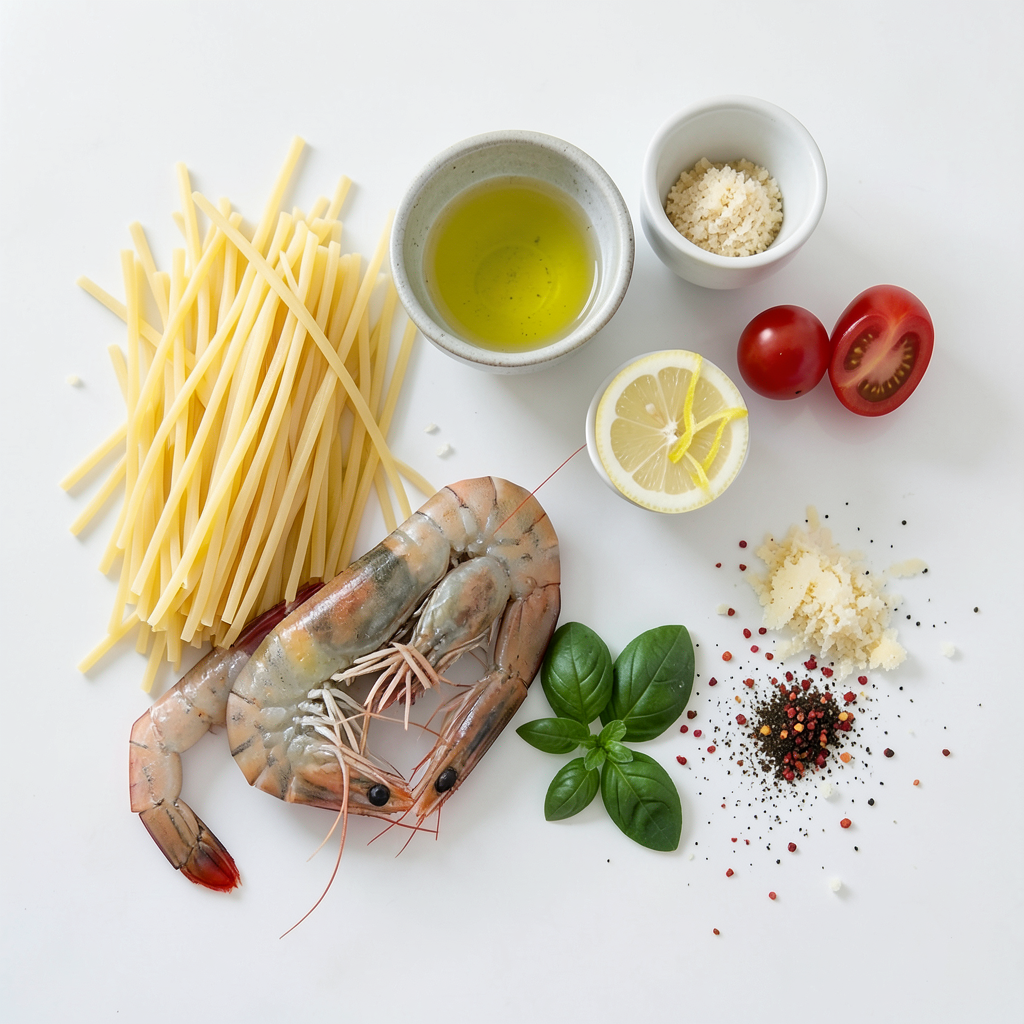
For this dish, you can use either spaghetti or linguine. Both types of pasta work well. Spaghetti is long and thin, while linguine is flat and broader. Choose what you prefer.
Next, look for large shrimp that are peeled and deveined. They cook quickly and soak up flavors. You can use fresh or frozen shrimp, but fresh gives the best taste.
Olive oil serves as the base for flavor. It adds richness and helps cook the shrimp. Garlic brings a nice aroma and taste. Use fresh, minced garlic for the best flavor. Finally, lemon juice and zest add brightness and tang to the dish.
Additional Ingredients
Cherry tomatoes add sweetness and color. They burst with flavor when cooked, making every bite special. Halving them allows their juices to mix with the pasta.
Fresh basil is key in this recipe. It adds a refreshing taste that balances the dish. Always use fresh basil for the best results.
You can add red pepper flakes for a hint of spice. They are optional but can elevate the flavor. Adjust the amount to your taste.
Serving Suggestions
To serve, consider sprinkling grated Parmesan cheese on top. It adds a savory touch and pairs well with the lemon and shrimp.
For side dishes, a simple salad or garlic bread works great. These sides complement the pasta without overpowering it. Enjoy your meal with a light drink, like iced tea or sparkling water.
Step-by-Step Instructions
Cooking the Pasta
To cook spaghetti or linguine al dente, start with a large pot of boiling salted water. Add your pasta and stir it well. Follow the package instructions for cooking time, usually around 8 to 10 minutes. You want it firm but not hard.
Before draining, reserve 1 cup of pasta water. This water has starch that helps the sauce stick. After saving the water, drain the pasta in a colander and set it aside.
Sautéing the Shrimp
Heat 3 tablespoons of olive oil in a large skillet over medium heat. Add 3 minced garlic cloves to the oil. Cook the garlic for about 1 minute until it smells great. This step is key; garlic adds flavor and sets the stage for the shrimp.
Next, add 1 pound of large shrimp to the skillet. Cook the shrimp for 2 to 3 minutes. Flip them halfway through. They should turn pink and opaque when done. Then, add 1 cup of halved cherry tomatoes. Cook these for another 2 minutes until they soften.
Combining the Ingredients
Once the shrimp and tomatoes are ready, stir in the juice and zest of 1 lemon, along with red pepper flakes if you like some heat. This mix adds bright flavors to the dish.
Now, add the cooked pasta to the skillet. Pour in the reserved pasta water, too. Toss everything well to combine. This helps the flavors mix and coat the pasta nicely.
Finally, mix in 1/2 cup of chopped fresh basil. Season with salt and pepper to taste. Cook for another minute. This lets all the flavors blend together beautifully.
Tips & Tricks
Perfecting Shrimp Cooking
To cook shrimp just right, look for a few signs. First, they should turn pink. This means they are nearly done. Second, they should be opaque in color. If they look gray, they need more time. Finally, the texture should feel firm, not mushy.
To avoid overcooking shrimp, keep a close eye on them. Cook shrimp for only 2-3 minutes per side. Remember, they will continue to cook a little after you remove them from heat. If you see them curling tightly, that means they are overcooked.
Enhancing Flavor
To boost flavor, consider adding herbs like parsley or cilantro. You can also sprinkle in spices like paprika or oregano for extra zest. If you want a stronger lemon flavor, add more juice or zest. Start with a little and taste as you go. This way, you can get the perfect balance.
Presentation Tips
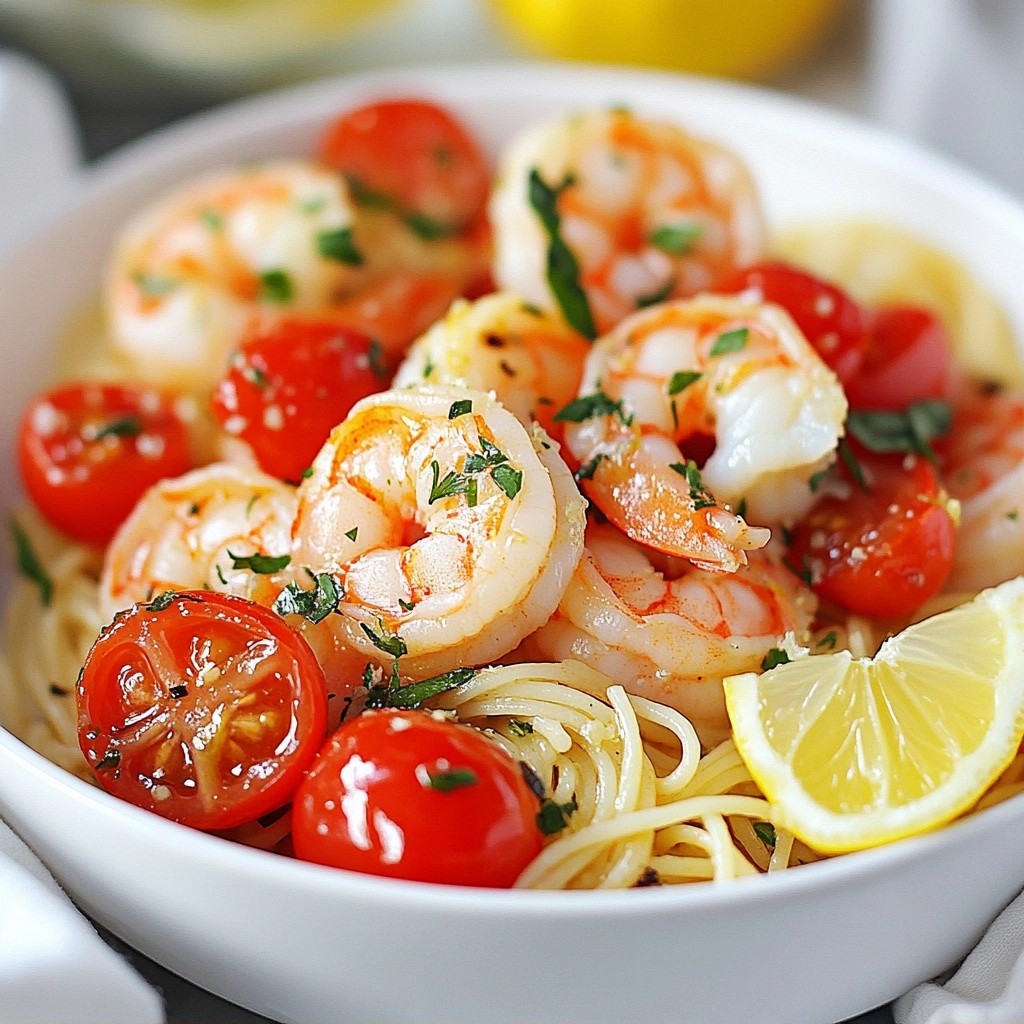
For plating this dish, use a wide bowl to show off the pasta. Twirl the pasta into a mound for a nice shape. Scatter shrimp and tomatoes on top for color.
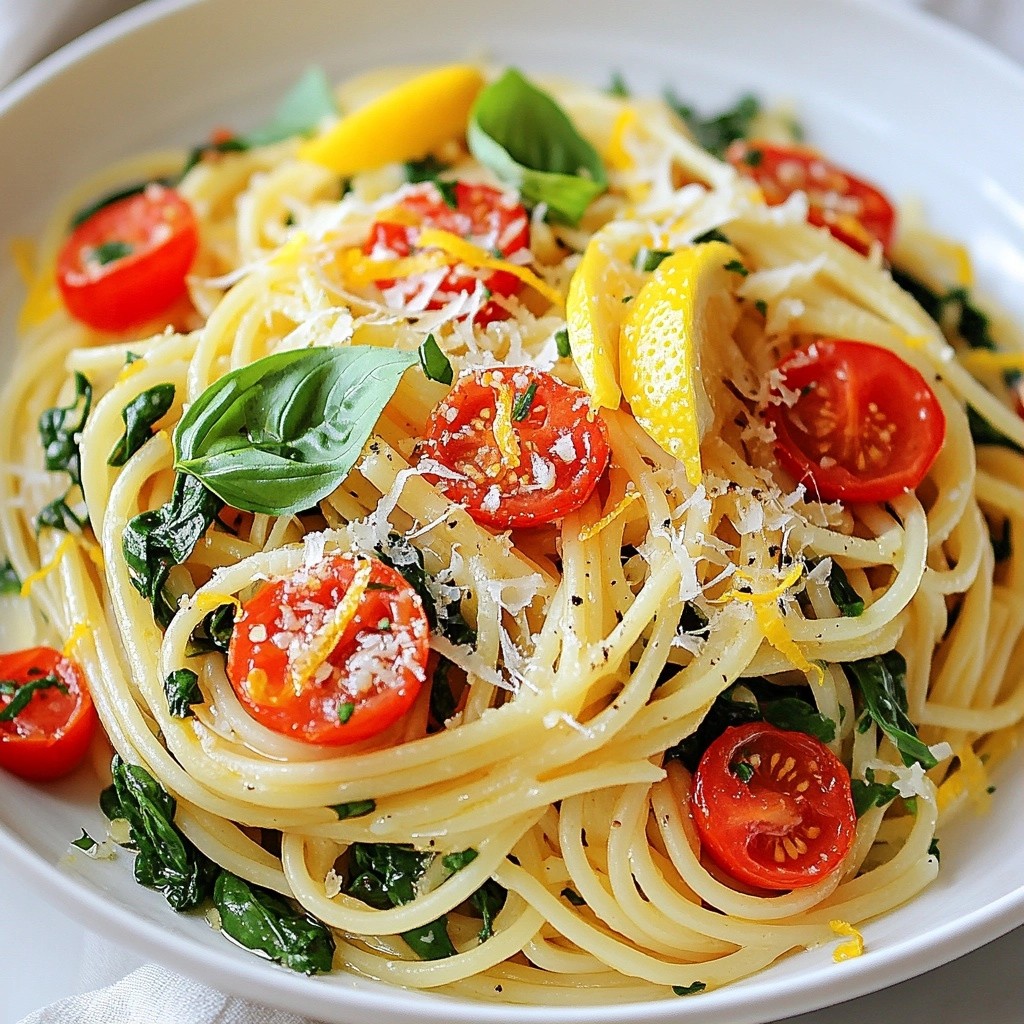
For garnishing, fresh basil leaves add a pop of green. You can also sprinkle grated Parmesan cheese on top. This adds richness and looks great. You could even add a slice of lemon on the side for extra flair.
Pro Tips
- Use Fresh Ingredients: Fresh shrimp and basil will elevate the flavor of your dish significantly. Opt for the freshest shrimp available, and if possible, use homegrown or freshly purchased basil.
- Reserve Pasta Water: The starchy pasta water helps to bind the sauce and pasta together. Always reserve some before draining, as it can help adjust the consistency of your dish.
- Don’t Overcook the Shrimp: Shrimp cooks quickly; avoid overcooking by keeping an eye on the color. They should turn pink and opaque in just a few minutes.
- Add Extra Zest: For an even more pronounced lemon flavor, add a little extra lemon zest when serving. It brightens the dish and enhances its freshness.
Variations
Protein Swaps
You can swap shrimp for other proteins. Chicken is a great choice. Simply cut it into bite-sized pieces and cook it the same way as shrimp. Scallops also work well; they cook quickly and add a nice flavor. For a vegetarian option, try using chickpeas or tofu. Both will soak up the lemon flavor and add protein.
Pasta Variety
Feel free to change the pasta type. Whole wheat pasta is a healthier option, adding fiber. Gluten-free pasta is great for those who need it. You can also include vegetables. Try adding spinach, zucchini, or broccoli. They will add color and nutrition to your dish.
Sauce Modifications
You can switch up the sauce for a creamy version. Just add heavy cream or cheese for a rich taste. This will change the dish's texture and flavor profile. For extra depth, consider adding a splash of white wine. It adds a nice acidity that balances the lemon.
Storage Info
Storing Leftovers
When you cook too much, store your leftovers in an airtight container. Place it in the fridge. It keeps the pasta fresh and tasty. You can store it for up to three days. If you want to freeze, make sure to separate the shrimp and pasta. This helps them stay fresh longer. Use freezer bags or containers. Write the date on the bag so you remember when you froze it.
Reheating Tips
To reheat pasta, add a splash of water. It helps keep the pasta moist. You can use the microwave or stovetop. For the microwave, heat for one minute. Stir, then heat for another minute. On the stovetop, add a bit of olive oil to a pan. Heat on low, adding the pasta until warm. Avoid high heat to keep it from getting dry.
Shelf Life
In the fridge, this dish lasts about three days. In the freezer, it can last for up to three months. Check for signs of spoilage before eating. If it smells off or looks strange, throw it away. The shrimp should be firm and not slimy. Fresh pasta should look bright and colorful.
FAQs
Can I use frozen shrimp?
Yes, you can use frozen shrimp for this dish. First, you need to thaw them. Place the shrimp in a bowl of cold water for about 15-20 minutes. Once thawed, peel and devein them if needed. Cooking time may be a bit longer. Ensure they turn pink and opaque. This method keeps the shrimp tender and juicy.
What can I substitute for fresh basil?
If you don’t have fresh basil, dried basil works. Use about one teaspoon of dried basil for every tablespoon of fresh. You can also try parsley or oregano. These herbs add a different flavor but still taste great. Just mix them in like you would with fresh basil.
Is this recipe gluten-free?
Yes, this recipe can be gluten-free. Use gluten-free spaghetti or linguine instead of regular pasta. Many brands offer good options that taste great. Just cook them according to the package instructions. This way, you can still enjoy a tasty meal without gluten.
This blog post covered how to make a delicious shrimp pasta dish. We explored key ingredients like pasta type and shrimp choice. Olive oil, garlic, and lemon are essential flavors. Serving suggestions included garnishes and side dishes.
We also shared step-by-step cooking instructions, tips for perfect shrimp, and various ingredient swaps.
Finally, we discussed storage and reheating tips to keep leftovers fresh. With these insights, you can enjoy shrimp pasta in many ways. Happy cooking!