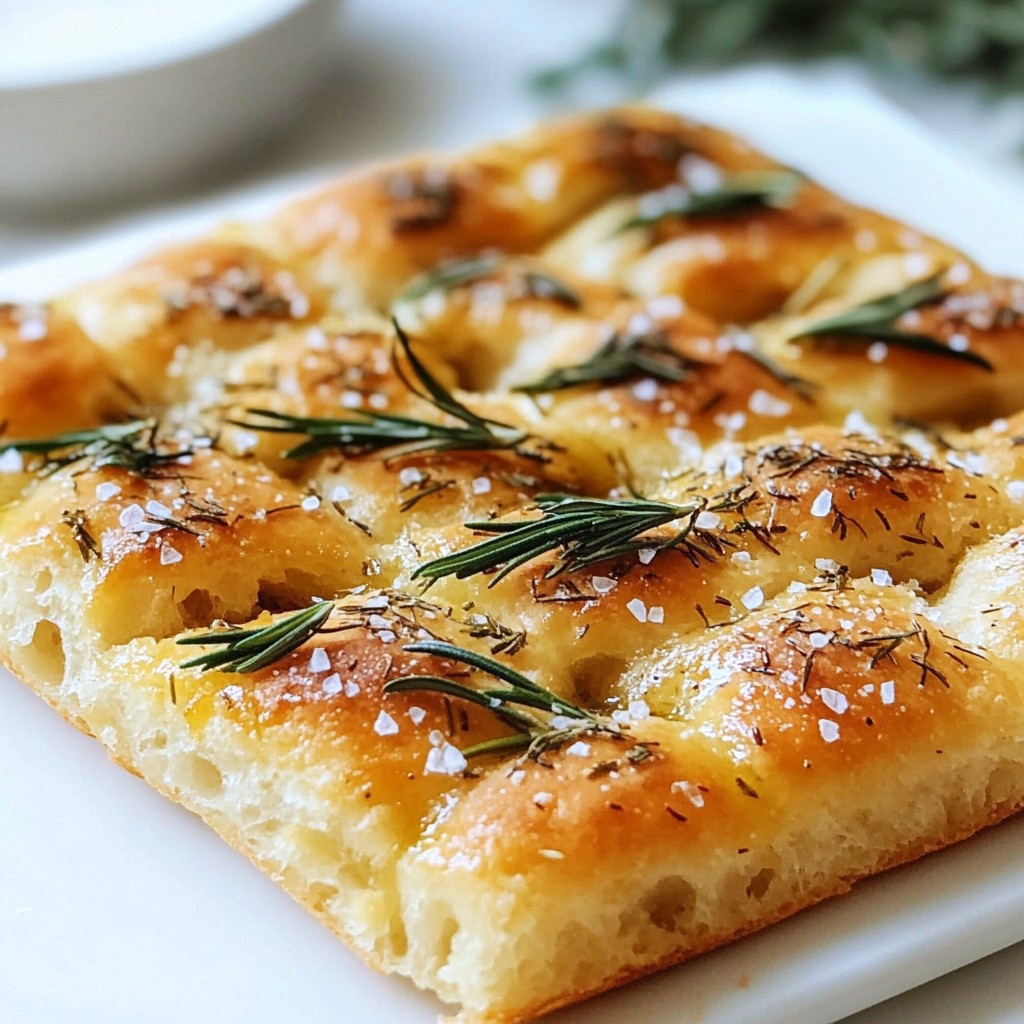
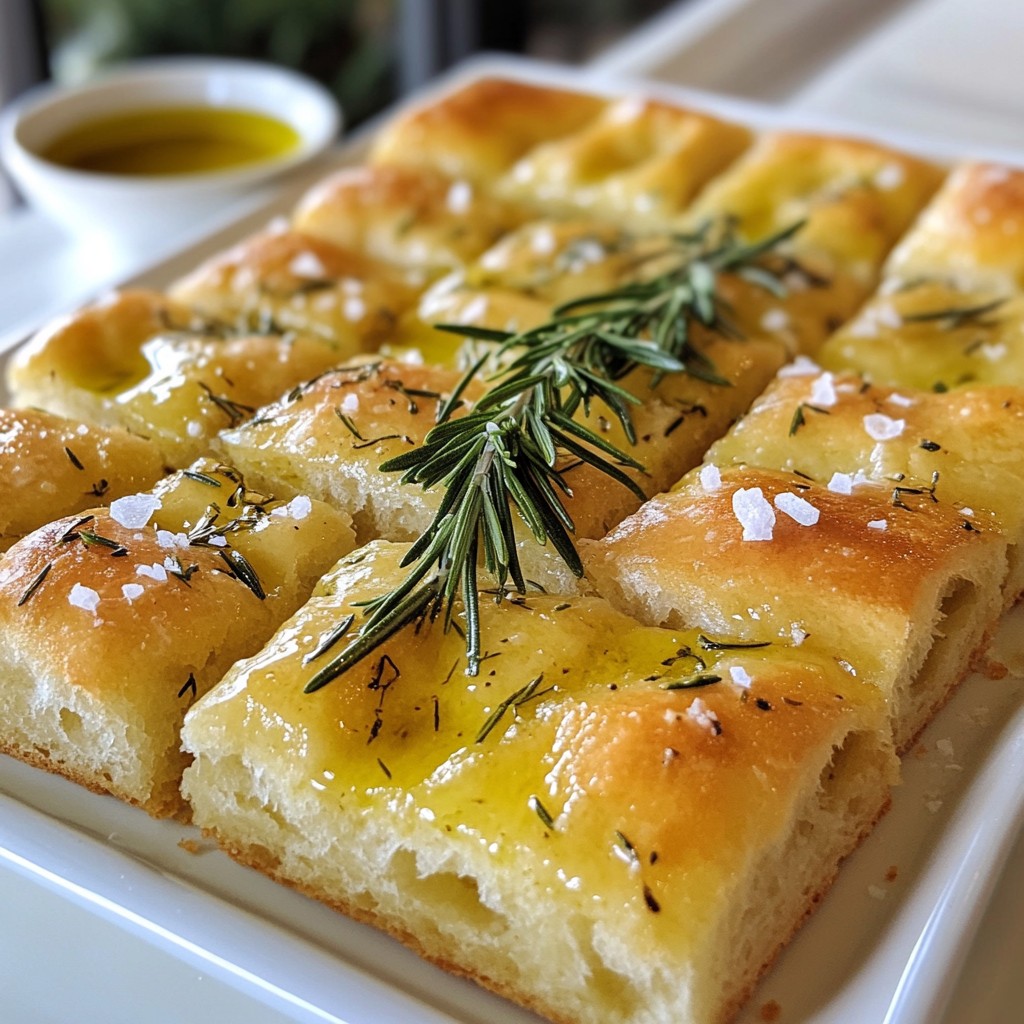
Craving homemade bread without all the hard work? This No Knead Rosemary Focaccia recipe makes that dream a reality. With just a few simple ingredients, you’ll create a warm, flavorful loaf that’s perfect for any meal. Imagine the aroma of fresh rosemary wafting through your kitchen as you enjoy this easy, no-fuss baking experience. Let's dive into the world of focaccia and transform your baking game!
Why I Love This Recipe
- Easy Preparation: This focaccia requires no kneading, making it a simple and accessible recipe for bakers of all levels.
- Flavorful Ingredients: The combination of fresh rosemary and olive oil creates a fragrant and delicious bread that elevates any meal.
- Flexible Rising Time: With a long fermentation period, you can prepare the dough the night before, allowing for a flexible baking schedule.
- Perfect for Sharing: Cut into squares, this focaccia makes for an excellent appetizer or side dish, perfect for gatherings.
Ingredients
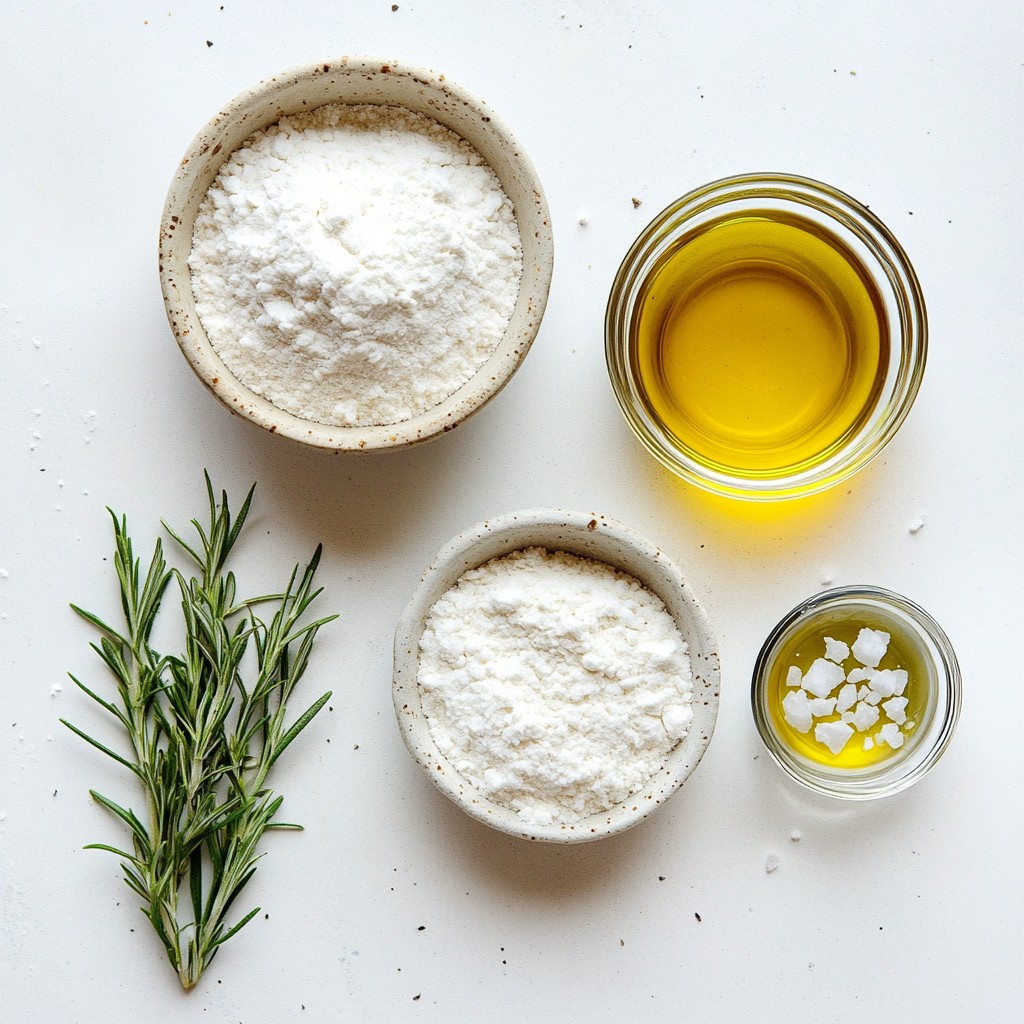
To make delicious no-knead rosemary focaccia, you need just a few simple ingredients. Here’s what you will need:
- 4 cups all-purpose flour
- 2 teaspoons kosher salt
- 1 teaspoon instant yeast
- 2 cups lukewarm water
- 1/4 cup extra-virgin olive oil (plus more for drizzling)
- Fresh rosemary sprigs
- Coarse sea salt for sprinkling
- Optional garnishes (e.g., additional herbs, spices)
Each ingredient plays a key role in creating the perfect focaccia. The flour gives the bread structure, while the salt enhances the flavor. Instant yeast helps the dough rise quickly, so you don't need to knead. Lukewarm water activates the yeast, making it bubbly and alive.
Extra-virgin olive oil adds richness and moisture, making each bite melt in your mouth. Fresh rosemary gives a wonderful scent and a tasty kick. Coarse sea salt on top adds a nice crunch and flavor burst.
Feel free to experiment with optional garnishes like garlic, olives, or sun-dried tomatoes. These can take your focaccia to a whole new level!
Step-by-Step Instructions
Detailed Preparation Steps
1. Mixing dry ingredients: Start with a large mixing bowl. Add 4 cups of all-purpose flour, 2 teaspoons of kosher salt, and 1 teaspoon of instant yeast. Stir well to mix all dry ingredients evenly.
2. Incorporating wet ingredients: Next, pour in 2 cups of lukewarm water and 1/4 cup of extra-virgin olive oil. Use a wooden spoon or spatula to mix until a sticky dough forms. The dough will be wet and shaggy. Make sure to combine all the flour from the sides of the bowl.
3. Covering and letting the dough rise: Cover the bowl with plastic wrap or a clean kitchen towel. Let the dough rise at room temperature for 12-18 hours. You’ll know it’s ready when the surface is bubbly, and the dough has doubled in size.
Prepping for Baking
1. Preheating the oven and warming the baking sheet: Preheat your oven to 425°F (220°C). While the oven heats, place a baking sheet or a 9x13 inch baking dish inside to warm up.
2. Shaping and transferring the dough: After the dough has risen, sprinkle flour on your work surface. Turn out the dough and gently stretch it into a rough rectangle. Don’t stress about making it perfect. Carefully take out the hot baking sheet, drizzle it with olive oil, and transfer the dough onto it. Gently stretch the dough to fill the pan edges.
Baking the Focaccia
1. Dimpling the surface and adding toppings: Use your fingers to make dimples all over the focaccia. Drizzle more olive oil on top. Scatter fresh rosemary sprigs across the surface and sprinkle with coarse sea salt.
2. Baking time and signs of doneness: Bake the focaccia for 20-25 minutes. It should turn golden brown and crispy on top. Once baked, remove it from the oven and let it cool slightly before slicing.
Tips & Tricks
Dough Consistency Tips
What should the dough feel like? The dough should be wet and sticky. It should not hold its shape. If it feels too dry, add a bit more water. In humid weather, you might need less flour. If you use a different flour type, adjust the water amount too. Whole wheat flour absorbs more water than all-purpose flour.
Best Practices for Flavor Enhancement
Want to boost the flavor? Try adding garlic or sundried tomatoes. You can also sprinkle fresh herbs like thyme or oregano on top. For the best crust, preheat your oven and the baking sheet. This helps create a crispy bottom. Use a good olive oil for drizzling; it adds rich flavor.
Troubleshooting Common Issues
What if the dough doesn’t rise? Make sure your yeast is fresh. If the dough feels cold, let it sit in a warm spot. For uneven baking, rotate the pan halfway through. If your focaccia is too dense, it might have too much flour. Next time, add less flour or more water.
Pro Tips
- Use Good Quality Olive Oil: The flavor of your focaccia is greatly enhanced by the quality of olive oil used. Opt for extra-virgin olive oil for the best taste.
- Experiment with Toppings: While rosemary is classic, feel free to add toppings like sliced olives, cherry tomatoes, or garlic for additional flavors and textures.
- Preheat the Baking Sheet: Heating the baking sheet before adding the dough creates a crispy bottom crust, giving your focaccia a delightful texture.
- Don’t Rush the Rising Time: Allowing the dough to rise for the full 12-18 hours develops the flavor and texture, making your focaccia light and airy.
Variations
Flavor Infusions
You can change the flavor of your focaccia in fun ways. Here are some ideas:
- Garlic and herb focaccia: Mix minced garlic and dried herbs into the dough. This adds a bold taste.
- Tomato and olive focaccia: Add sliced tomatoes and olives on top. This gives a fresh and savory twist.
These flavor options let you enjoy focaccia in different ways. You can use your favorite herbs or toppings to make it unique!
Dietary Adaptations
People with different diets can still enjoy focaccia. Here are some easy swaps:
- Gluten-free alternative options: Use a gluten-free flour blend instead of all-purpose flour. This makes it safe for gluten-free eaters.
- Vegan substitutions for oil or toppings: Replace the olive oil with avocado oil. You can also use plant-based toppings like sun-dried tomatoes.
These adaptations keep the focaccia delicious while meeting dietary needs.
International Inspirations
Focaccia has many styles from around the world. Here are two tasty ideas:
- Mediterranean style focaccia with olives: Mix green and black olives into the dough. This gives a salty and rich flavor.
- Sweet focaccia variations: Add honey or sugar to the dough. Top with fruits like figs or peaches for a sweet treat.
These international twists show how versatile focaccia can be! You can explore flavors from many cultures.
Storage Info
How to Store Focaccia
To keep your focaccia fresh, store it at room temperature. Place it in a bread box or wrap it in a clean kitchen towel. This helps the bread breathe while keeping it soft. Avoid plastic bags, as they can make the crust soggy.
For longer storage, consider refrigeration. Wrap the focaccia tightly in plastic wrap. This will help prevent it from drying out. You can also freeze focaccia. Cut it into portions, then wrap each piece in plastic wrap. Put the wrapped pieces in a freezer bag. This keeps them fresh for up to three months.
Reheating Instructions
To reheat focaccia, the oven is the best choice. Preheat your oven to 350°F (175°C). Place the focaccia directly on the oven rack for about 10 minutes. This will make it warm and crispy again.
You can also use a skillet. Heat it over medium heat. Add a little olive oil, then place the focaccia in the pan. Cover it with a lid for about 5 minutes. This method gives you a nice crust while warming it through.
After reheating, try serving focaccia with olive oil for dipping. You can also top it with fresh herbs or cheese for extra flavor.
Shelf Life Expectations
Focaccia lasts about 2 to 3 days at room temperature. If you refrigerate it, it can last up to a week. Freezing focaccia can extend its life to three months. Just remember to wrap it well to keep it fresh.
FAQs
Common Questions about No Knead Rosemary Focaccia
Can I use active dry yeast instead of instant yeast? Yes, you can use active dry yeast. Just dissolve it in the lukewarm water first. Let it sit for about five minutes. This wakes up the yeast. After that, mix it with the flour and salt as usual. The rise time might be a bit longer, so keep an eye on it.
How can I adjust the recipe for a smaller batch? To make a smaller batch, simply halve the ingredients. Use 2 cups of flour, 1 teaspoon of salt, and 1/2 teaspoon of yeast. You can also reduce the water to 1 cup. This will help you keep the ratios right. Be sure to adjust your baking time too, as it may bake faster!
Ingredient Substitutions
What can I substitute for all-purpose flour? You can use bread flour instead. This will give your focaccia a chewier texture. If you need a gluten-free option, try a gluten-free all-purpose blend. Make sure it has xanthan gum for the best results.
Is there a non-olive oil alternative for this recipe? Yes, you can use melted butter or avocado oil instead of olive oil. Both will add great flavor. If you want a lighter taste, try using canola oil or sunflower oil.
Baking Techniques
What is the best way to achieve a crispy crust? To get a crispy crust, preheat your baking sheet in the oven. When you add the dough, the heat will help create that nice crust. Also, don’t skip the olive oil drizzle on top. This adds flavor and helps with browning.
Can I make focaccia in a different pan shape? Absolutely! You can use a round pan, a cast-iron skillet, or even a baking stone. Just ensure the dough fills the pan evenly. Adjust the baking time if you change the size or shape of the pan.
Focaccia is a fun and tasty bread to make. We talked about the essential ingredients, like flour and yeast, and the steps to prepare it. I shared tips for perfecting the dough and adjusting flavors, plus variations to try. Remember, storing focaccia correctly keeps it fresh longer. With practice, your baking skills will shine. Enjoy making this delicious bread in your kitchen!