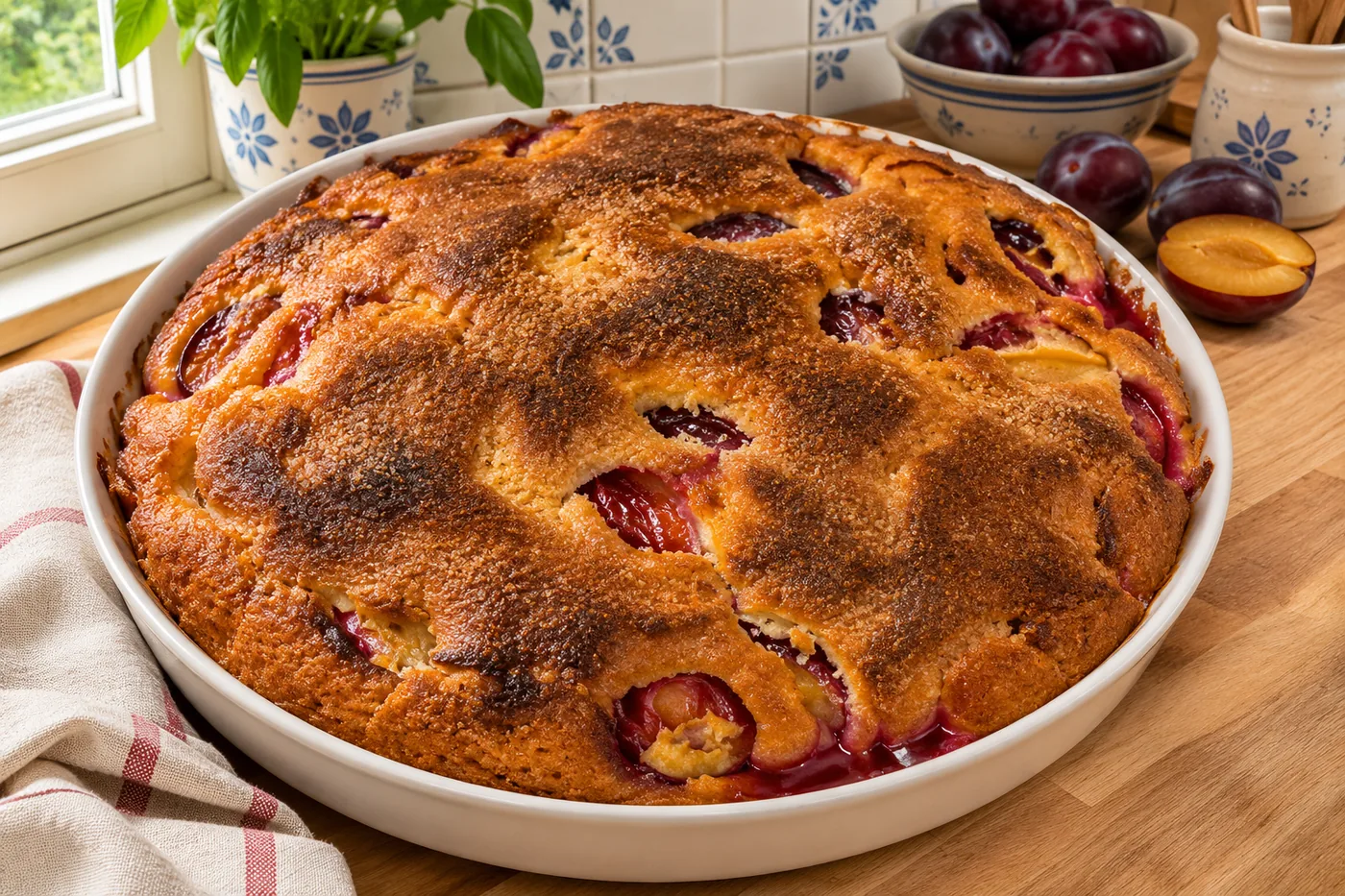
I remember the first time I tasted a German plum cake at a charming little bakery in my neighborhood. The sweet, juicy plums nestled in a buttery, tender base were memorable, and I knew I had to recreate that experience at home.
What sets this German plum cake apart is the perfect balance between tart and sweet, thanks to seasonal plums and a hint of cinnamon. It's a pleasureful twist that enhances this classic dessert, making it a must-try for any occasion.
Why This Recipe Works
- Fruit choice: The use of ripe plums not only brings natural sweetness but also moisture, which helps create a smooth, tender crumb. I tried this recipe with both plums and cherries, but the plums delivered a juicier texture that complemented the cake beautifully.
- Room temperature ingredients: Using room temperature eggs and milk is crucial for a consistent batter, allowing for better emulsification and a smoother texture. I once forgot to take the eggs out ahead of time, and the batter ended up lumpy, affecting the final rise.
- Baking powder and baking soda balance: The combination of baking powder and baking soda ensures the cake rises perfectly while keeping it light and airy. I experimented with just baking powder, but the cake turned out denser, lacking that delightful fluffiness.
- Topping texture contrast: The cinnamon and brown sugar topping not only adds a sweet crunch but also enhances the flavor profile of the cake. I made a batch without the topping once, and it was good, but the texture and flavor depth were noticeably missing.
Ingredients
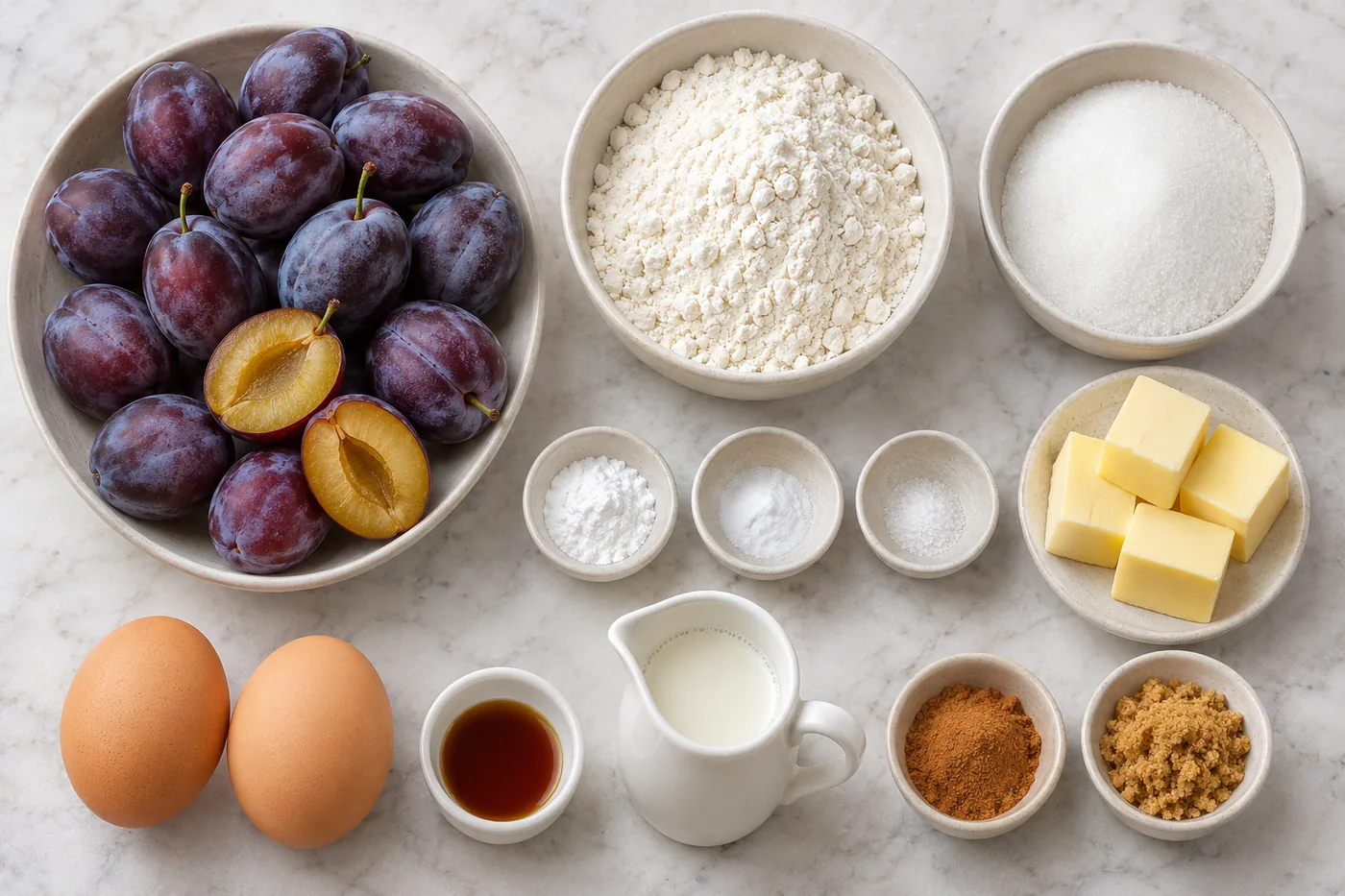
What You'll Need
- 1.5 lb plums, pitted and halved look for ripe plums that yield slightly to pressure; they add natural sweetness and moisture to the cake.
- 1 cup all-purpose flour, sifted sifting helps to aerate the flour, giving the cake a lighter texture.
- 1 tsp baking powder this is crucial for leavening, helping the cake rise and become fluffy.
- 1/2 tsp baking soda it works with the acidity in the plums to give an extra lift.
- 1/4 tsp salt salt enhances the sweetness and balances the flavors.
- 1/2 cup granulated sugar, plus extra for topping the sugar not only sweetens but also contributes to the cake's texture.
- 1/2 cup unsalted butter, softened using unsalted allows you to control the saltiness; it creates a rich flavor.
- 2 large eggs, at room temperature room temperature eggs mix better and help the cake rise.
- 1 tsp vanilla extract this adds warmth and depth to the flavor profile.
- 1/4 cup milk, at room temperature milk adds moisture and richness; room temperature helps it blend smoothly.
- 1 tbsp cinnamon, for topping cinnamon adds a warm, aromatic flavor that complements the plums.
- 1 tbsp brown sugar, for topping brown sugar adds a hint of caramel flavor and a nice crunch.
When selecting plums, choose ones that are soft to the touch but not overly mushy. The combination of all-purpose flour and leavening agents helps create a light, airy texture in this German plum cake, while the butter contributes richness and moisture.
Easy Substitutions
- Dairy-free: swap unsalted butter for coconut oil — the cake will have a slight coconut flavor and a tender crumb.
- Gluten-free: swap all-purpose flour for a gluten-free blend — the texture may be slightly denser, but it will still be delicious.
- Egg-free: swap eggs for 1/4 cup unsweetened applesauce — this will keep the cake moist but may result in a denser texture.
- Lower calorie: swap granulated sugar for a sugar substitute like Stevia — the cake will be less sweet and may alter the texture slightly.
Step-by-Step Instructions
Prep & Mix
- Preheat your oven to 350°F, and grease a 9x13 inch baking dish to create a non-stick surface for your cake.
- In a medium bowl, whisk together 2 cups of flour, 1 teaspoon of baking powder, 1 teaspoon of baking soda, and 1/2 teaspoon of salt. This helps to evenly distribute the leavening agents and salt, ensuring a uniform rise and flavor in your cake.
- In a large bowl, cream together 1 cup of softened butter and 1 cup of granulated sugar until the mixture is light and fluffy, about 3-4 minutes. This process incorporates air, which will help your cake be light and tender.
- Add 3 large eggs one at a time to the butter mixture, mixing well after each addition. This gradual incorporation helps the eggs emulsify, creating a smoother batter.
- Stir in 1 teaspoon of vanilla extract and 1/2 cup of milk until combined, adding moisture and flavor to the batter.
- Gradually add the dry ingredients to the wet mixture, mixing until just combined. Be careful not to overmix, as this can lead to a dense cake.
Bake & Top
- Pour the batter into the prepared baking dish and spread it evenly, ensuring every corner gets that delicious mixture.
- Arrange 4-5 halved plums on top of the batter, cut side up, for a beautiful presentation and juicy flavor that seeps into the cake during baking.
- In a small bowl, mix together 1 teaspoon of cinnamon, 1/4 cup of brown sugar, and 1/4 cup of extra granulated sugar, then sprinkle this over the plums. This adds a sweet, caramelized layer that complements the tartness of the fruit perfectly.
- Bake in the preheated oven for 40-45 minutes, until the tops are golden and a toothpick inserted in the center comes out clean with just a few moist crumbs. If it comes out with wet batter, give it a few more minutes.
- Allow the cake to cool in the pan for 10 minutes. This resting time helps the cake set and makes it easier to slice.
Serve
- Slice the cake into squares and serve warm for the best experience. The aroma will fill your kitchen, and the plums will be perfectly tender, creating a pleasureful treat.
Tips & Tricks
Use Ripe Plums for Maximum Flavor
Choosing the right plums is crucial for a delicious German plum cake. Look for plums that are slightly soft to the touch and have a vibrant, deep color. I once made the mistake of using firm, unripe plums, and the cake turned out bland and lacking that juicy sweetness. Ripe plums not only enhance the flavor but also provide a lovely, moist texture that complements the cake perfectly.
Don't Skip the Cooling Step
Once your cake is out of the oven, resist the urge to dive in right away! Letting the cake cool in the pan for about 15-20 minutes before transferring it to a wire rack allows the flavors to settle and the texture to firm up. I learned this the hard way when my first cake fell apart because I was too eager to cut into it. A little patience goes a long way for a slice that holds together beautifully!
Pro Tips
- Use Seasonal Plums for Best Flavor: Choosing plums in season makes a significant difference in taste. Look for those that yield slightly to pressure, indicating ripeness. I find that a mix of sweet and tart plums adds a wonderful depth to the cake.
- Try Different Toppings for Variety: Experimenting with toppings can transform your German plum cake. Consider adding a sprinkle of cinnamon sugar or sliced almonds before baking for an extra crunch. I once topped it with a crumbly streusel, which was an absolute hit.
- Cool Completely Before Storing: For the best texture, let your cake cool completely before wrapping or storing. This prevents moisture from building up, which can make the cake soggy. I often leave it uncovered overnight, and it stays perfectly moist.
- Use a Toothpick for Perfect Baking: Check for doneness using a toothpick. Insert it into the center of the cake – if it comes out clean or with a few crumbs, it’s ready. I learned the hard way to avoid overbaking, which can dry out this cake.
- Add a Glaze for a Sweet Finish: Drizzling a simple glaze made of powdered sugar and milk over the cooled cake enhances its flavor and appearance. I love how it adds a shiny touch, making it feel extra special without much effort.
Variations & Customizations
Flavor Twists
Almond Joy
Fold in ½ cup sweetened shredded coconut and ½ cup chopped almonds after mixing the batter. This version has a tropical flair, with the coconut adding a chewy texture and the almonds providing a pleasureful crunch.
Chocolate Swirl
Gently swirl in ½ cup melted dark chocolate into the batter before adding the plums. The result is a rich, decadent cake with pools of chocolate that melt into the warm plums, creating a smooth contrast.
Seasonal Versions
Autumn Spice
Replace the vanilla extract with 1 tsp of maple extract and add ½ cup chopped pecans to the batter. The cake will take on warm, nutty notes, with a hint of sweetness that perfectly complements the plums for a cozy fall treat.
Storage & Meal Prep
Room Temperature
Store your German plum cake at room temperature for up to 2 days in an airtight container. This keeps the cake moist and prevents it from drying out, which is key to maintaining that tender crumb.
Refrigerator
If you need to store it longer, refrigerate for up to 5 days in an airtight container. Make sure the cake has cooled completely before wrapping it to prevent condensation buildup.
Freezer
For longer storage, freeze the cake for up to 3 months. I recommend slicing it first and then flash freezing the slices on a sheet pan. Once they're solid, wrap each piece in plastic wrap and place them in a freezer bag. Thaw in the refrigerator overnight before enjoying.
Meal Prep
Consider doubling the recipe for a crowd-pleasing treat. I suggest prepping it the night before, allowing the flavors to meld beautifully. Use a glass or ceramic dish for even reheating. It stays fresh for about 3 days after baking, and to reheat, pop it in a 350°F oven for about 10-15 minutes until warmed through.
Frequently Asked Questions
Can I use other fruits instead of plums in this cake?
Yes, you can use other fruits like peaches or cherries. Just make sure they are ripe to achieve that sweet, juicy flavor.
Why did my German plum cake come out too dry?
A common issue is overbaking, which can dry out the cake. Keep an eye on the baking time and do the toothpick test a few minutes early.
What can I substitute for flour to make this cake gluten-free?
You can use a gluten-free all-purpose flour blend, which usually works well in recipes like this. Just check that it contains xanthan gum for the right texture.
How can I make this cake dairy-free?
To make a dairy-free version, substitute regular butter with coconut oil or a dairy-free butter alternative. The flavor will still be delicious while accommodating dietary needs.
What’s the best way to serve German plum cake?
Serving it warm with a scoop of vanilla ice cream or a dollop of whipped cream is fantastic. It adds a nice contrast to the fruity, spiced cake.
This German plum cake is a pleasureful way to celebrate the sweetness of summer, with its tender crumb and juicy fruit that make every bite a joy. For an extra touch, sprinkle some cinnamon on top before baking to enhance those lovely flavors. I can't wait for you to try it — let me know how it turns out in the comments or save it to your Pinterest for later!